The primary goal of a golf laser rangefinder is to provide accurate distance measurements to the flag, allowing for more precise club selection and improved scoring. While owning a dedicated laser rangefinder is the most common way to achieve this, it is not the only method available to golfers looking to improve their yardage accuracy on the course.
Can I buy a used golf laser rangefinder?
Buying a used golf laser rangefinder allows you to access high-end optics and sensors at a lower entry price than new retail models. This route works by sourcing gear from secondary markets, where previous owners sell units that may have minor cosmetic wear but still maintain functional accuracy.
Compared to buying new, a used unit costs significantly less, often representing a 40% to 60% reduction in price depending on the age of the technology. This option beats buying new when you want a professional-grade device with high-quality glass but have a strict budget that excludes current-year models. It stops making sense if the device is several generations old, as older sensors may suffer from higher measurement latency or lower magnification levels that fail to meet the 6X magnification standard required to clearly identify a flagstick at distance.
Where these choices show up in our reviews
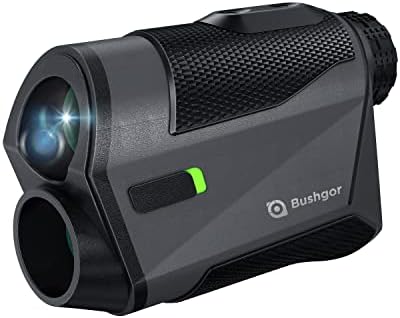
3 reviewed options, $109.99 to $329.99, with the full write-up behind each name.

Bushnell Tour V5 / Tour V5 Shift Laser
$329.99 price checked August 2026
If you need to shave seconds off your routine, see which device offers the quickest measurement speeds.
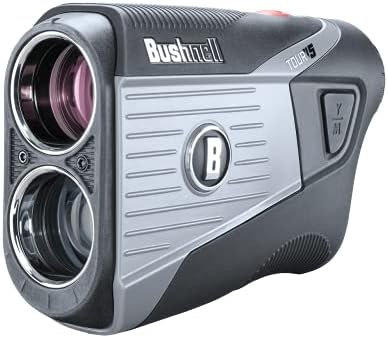
Bushnell Tour V5 Golf Laser Rangefinder
$269.99 price checked August 2026
Read our full Bushnell Tour V5 review
For those on a budget, explore top-tier rangefinders priced under $450.
Can I use a GPS watch or phone app instead of a golf laser rangefinder?
Using a GPS watch or smartphone app provides distance data by using satellite positioning to calculate the distance between your current coordinates and the known location of the hole. These devices use pre-mapped data to show you where you are on the course and how many yards remain to the green.
This alternative costs much less than a dedicated laser device, as many golfers already own a smartphone or a standard GPS watch. It beats buying a golf laser rangefinder for casual players who do not need real-time, point-to-point laser measurements and are comfortable relying on GPS-mapped paths. This method stops making sense when you need to account for specific terrain obstacles or when you require the precision of a laser to distinguish a flagstick from nearby trees, as GPS maps may not account for every physical obstruction on the course.
You can also find definitions for common rangefinder specs to help simplify your purchasing decision.
Is a golf GPS subscription a good alternative to a golf laser rangefinder?
A golf GPS subscription provides distance data through a dedicated app on your mobile device, often offering more detailed course maps and features than basic free apps. Users pay a recurring fee to access high-quality data, including yardage to hazards, slope information, and interactive maps.
The cost of a subscription is lower than the upfront cost of a high-end laser rangefinder but involves a recurring expense. It beats buying a golf laser rangefinder for golfers who prioritize having a comprehensive digital map and data set over the ability to point-and-click at a specific target. This option stops making sense when you require a device that functions independently of a cellular signal or when you need the immediate, real-time distance to a specific pin that a pre-mapped GPS might approximate.
Can I just improve my manual distance estimation?
Improving manual distance estimation involves developing the skill to judge yardage based on visual cues, such as the size of the green, the height of trees, and the layout of the fairway. This is the traditional method of golf, relying on experience and “feel” rather than electronic aids.
This alternative has no hardware cost, making it the most budget-friendly option. It beats buying a golf laser rangefinder for players who prefer a minimalist approach to the game or those who want to develop a better “feel” for the course. This method stops making sense as a reliable primary tool when you are consistently missing targets due to poor yardage estimation, or when the course layout is complex enough that visual cues are misleading.
Comparison of Distance Measurement Methods
| Method | Who it suits | Main advantage | Where it breaks down |
|---|---|---|---|
| Buying New | Serious golfers who want the latest tech | Highest accuracy and latest features | High upfront cost |
| Buying Used | Budget-conscious golfers seeking quality | High-end specs at a lower price | Risk of older, slower sensors |
| GPS Watch/App | Casual players and tech-savvy users | Low cost and easy to carry | Lacks point-to-point laser precision |
| GPS Subscription | Data-driven golfers who use phones | Detailed maps and hazard data | Requires data/signal and recurring cost |
| Manual Estimation | Traditionalists and beginners | Zero cost and develops skill | Inconsistent and prone to error |
When is buying a golf laser rangefinder the right choice?
Buying a golf laser rangefinder is the right choice when you require consistent, point-to-point accuracy that is independent of GPS mapping. It is the correct choice if you frequently play on courses with complex layouts where distinguishing a flagstick from a nearby tree is a frequent requirement. If you play frequently enough that a 10-20 yard error in club selection consistently affects your score, the investment in a dedicated laser device provides a level of reliability that GPS and manual estimation cannot match. Finally, it is the right choice when you want a dedicated tool that provides immediate feedback without the need to navigate menus or rely on a smartphone screen.
More Golf Laser Rangefinder explainers and comparisons
- The Golf Laser Rangefinders That Work Best for Long Distances
- Which Golf Laser Rangefinder with Pin Seeker Is Best?
- Best Golf Laser Rangefinders for Fast Measurement
- Golf Laser Rangefinders for Tournament Play Under $450 Compared
- Choosing the Best Golf Laser Rangefinder for Gift Giving
- Best Golf Laser Rangefinders for Beginners