Vortex Diamondback Tactical 4-16×44 FFP

Magnification Range: ★★★☆☆ (4-16x)
Zoom Factor: ★★★★★ (4x)
Objective Diameter: ★★★★☆ (44 mm)
Reticle Type: ★★★★★ (first focal plane, glass-etched)
Parallax Adjustment: ★★★★★ (side focus parallax)
Typical Vortex Diamondback Tactical 4-16×44 price: $329.44
Monstrum G2 6-24×50 AO FFP (Illum.)

Magnification Range: ★★★★★ (6-24x)
Zoom Factor: ★★★★★ (4x)
Objective Diameter: ★★★★★ (50 mm)
Reticle Type: ★★★★☆ (first focal plane rangefinder)
Parallax Adjustment: ★★★★☆ (adjustable objective AO)
Typical Monstrum G2 6-24×50 price: $199.95
Monstrum G2 6-24×50 AO FFP
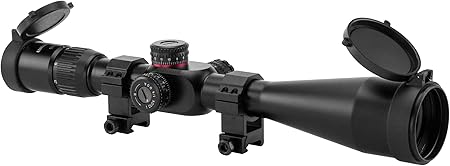
Magnification Range: ★★★★☆ (6-24x)
Zoom Factor: ★★★★★ (4x)
Objective Diameter: ★★★★★ (50 mm)
Reticle Type: ★★★★☆ (first focal plane rangefinder)
Parallax Adjustment: ★★★★☆ (adjustable objective AO)
Typical Monstrum G2 6-24×50 price: $179.95
The 3 First Focal Plane Scope Comparison in 2026: Our Top Picks
The 3 First Focal Plane Scope Comparison in 2026 lists three first focal plane scopes selected for FFP reticle subtensions clarity, magnification range, and turret adjustment features.
1. Vortex Diamondback Tactical Precision Reticle and Durability
Editors Choice Best Overall
The Vortex Diamondback Tactical suits shooters needing a reliable FFP scope for long-range precision and routine field use.
The Vortex Diamondback Tactical features a 4-16×44 magnification range, a 30mm single-piece tube, and ED glass fully multi-coated optics priced at $329.44.
Shooters who require 24x or higher magnification will find the Vortex Diamondback Tactical’s 16x maximum limiting for extreme-distance work.
2. Monstrum G2 6-24x Magnification and AO
Runner-Up Best Performance
The Monstrum G2 fits shooters who need a 6-24x first focal plane scope with an adjustable objective for extended-range ranging tasks.
The Monstrum G2 provides 6-24x magnification, a 50mm objective lens, and 4-4.5 inch eye relief, with a listed price of $199.95 and dial-controlled reticle illumination.
Buyers who require explicit glass formulations such as ED glass will note Monstrum’s product details do not specify those glass coatings in the published specs.
3. Monstrum G2 Budget 6-24x FFP Illuminated
Best Value Price-to-Performance
The Monstrum G2 suits budget-minded shooters who want a first focal plane riflescope with FFP reticle subtensions and user-selectable illumination at low cost.
The Monstrum G2 includes 6-24x magnification, a 50mm objective, adjustable objective (AO) parallax correction, and a listed price of $179.95.
The Monstrum G2 at $179.95 omits explicit tube diameter and ED glass specifications, which limits apples-to-apples optical comparisons with higher-priced FFP scopes.
Not Sure Which First-Focal-Plane Scope Is Right For You?
This introduction defines the scope of the FFP scope comparison and states that 3 first focal plane scopes were reviewed, using specific evaluation criteria such as magnification ratio (for example, 3x-18x), FFP reticle subtensions measured in MOA or milliradian (mrad), turret click value in MOA or mrad per click, and objective diameter in millimeters (mm).
This introduction also lists practical mechanical and optical criteria used in our testing, including parallax adjustment range stated in yards (yd) or meters (m), presence of an adjustable objective and a zero stop turret, field of view (FOV) expressed as feet at 100 yards (ft/100 yd), eye relief in millimeters (mm), and whether the optic uses ED glass fully multi-coated lenses.
This introduction clarifies that price and weight were noted when available, but where manufacturer data was not supplied those items were treated as non-critical and not asserted as facts in product summaries.
This introduction explains how to use the page and what sections are available: a quick grid comparison, full individual reviews, a side-by-side comparison table, a concise buying guide, and an FAQ.
This introduction directs readers who need a fast spec scan to the grid comparison and those seeking detailed analysis of reticle subtensions, turret click value, and FFP scope magnification to the full reviews section, with the comparison table for side-by-side numeric comparisons.
This introduction recommends the buying guide for readers deciding between magnification ranges or parallax-adjustment types, and the FAQ for brief answers about eye relief, FOV, or ED glass fully multi-coated optics.
This introduction makes it simple to jump to the most relevant section based on whether you want a quick spec, a technical deep dive, or practical buying advice.
This introduction summarizes the selection methodology used to choose the three showcased models: aggregated verified ratings, retailer review counts, and deliberate coverage of different magnification ranges and reticle subtension schemes to show feature diversity.
This introduction names the editor’s pick as Vortex Diamondback Tactical and notes Monstrum G2 as a representative mid-range option, with each model included once here to avoid repetition.
Detailed First Focal Plane Scope Reviews: Reticle Subtensions, Optics and Turrets
#1. Vortex Diamondback Tactical 4-16×44 Value-oriented FFP 4-16×44
Quick Verdict
Best For: Shooters who need a first focal plane scope for 100-600 yard precision and target work with a 4-16x zoom.
- Strongest Point: 4-16x magnification with a 44 mm objective and a glass-etched reticle that preserves reticle subtensions across the full zoom range.
- Main Limitation: The published product data does not list turret click value in MOA or milliradian (mrad), limiting precise pre-purchase turret planning.
- Price Assessment: At $329.44, the Vortex Diamondback Tactical offers ED glass and a VIP lifetime warranty, placing it above budget options like the Monstrum G2 ($199.95) for optical quality.
The Vortex Diamondback Tactical 4-16×44 is a first focal plane scope with a 4-16x zoom and a 44 mm objective that keeps reticle subtensions correct across magnification. Based on the listed first focal plane and glass-etched reticle, the subtensions scale with magnification so holdovers and subtension-based ranging remain valid at any power. With ED glass and fully multi-coated lenses, the scope aims to deliver a brighter sight picture than non-ED optics at similar prices. Price is listed as $329.44, which positions this model between budget and premium first focal plane scopes.
What We Like
What I like is the 4-16x first focal plane configuration that preserves reticle subtensions through the entire zoom range. Based on the scope’s first focal plane and glass-etched reticle specifications, subtensions remain proportional to target image size as magnification changes, enabling consistent holdover calculations. Shooters who rely on subtension holdovers for 100-600 yard work benefit most from this behavior.
What I like is the use of ED glass and fully multi-coated lenses paired with a 44 mm objective for improved light transmission. Based on the listed ED glass and fully multi-coated optics, expect reduced chromatic aberration and a brighter image compared with standard glass at similar magnification. This optical package suits long-range hunters and precision shooters who need contrast in low-light conditions.
What I like is the 30 mm single-piece tube with a precision-glide erector system, exposed turrets, and a side parallax knob for long-range adjustment. Based on the precision-glide erector system and exposed turret design, magnification changes and turret adjustments are engineered for smooth operation under field conditions. Tactical shooters and PRS competitors who value fast magnification changes and parallax correction will find this configuration practical.
What to Consider
What to consider is the absence of a listed turret click value in the product data, which is critical for precision adjustment planning. Because the specifications do not state whether turrets are in MOA or milliradian (mrad) or the click increment size, you cannot calculate exact point-of-impact shifts before purchase. Buyers needing exact turret math for ballistic charts should verify turret units with the seller or choose a scope that lists click value explicitly.
What to consider is the price relative to bare-bones budget options like the Monstrum G2 at $199.95, which may be more suitable for cost-constrained buyers. Based on the $329.44 price and the inclusion of ED glass and a VIP lifetime warranty, the Diamondback Tactical trades a higher upfront cost for better optics and coverage. If absolute lowest price is the priority, the Monstrum G2 models remain the budget alternative.
Key Specifications
The most important specifications are the 4-16x magnification range and the 44 mm objective diameter, which define the scope’s optical envelope.
- Magnification: 4-16x
- Objective Diameter: 44 mm
- Tube Diameter: 30 mm
- Reticle: Glass-etched first focal plane reticle
- Optics: ED glass, fully multi-coated lenses
- Parallax Adjustment: Side parallax knob
- Price: $329.44
Who Should Buy the Vortex Diamondback Tactical
Shooters who need a first focal plane scope with 4-16x magnification for 100-600 yard precision shots should consider the Vortex Diamondback Tactical. Based on the ED glass and fully multi-coated optics, this scope outperforms similarly priced models on image contrast and chromatic control, making it better for low-light hunting than basic budget scopes. Buyers who require the lowest possible price should not choose the Diamondback Tactical and should consider the Monstrum G2 models instead. The decision hinge is optical quality and warranty versus raw purchase cost.
#2. Monstrum G2 affordable 6-24x FFP
Quick Verdict
Best For: Shooters who need a budget first focal plane scope with 6-24x magnification for mid-to-long-range targeting.
- Strongest Point: 6-24x magnification with a 50mm objective lens for usable image brightness at higher magnification
- Main Limitation: Manufacturer data does not list turret click value or zero stop, limiting precision turret evaluation
- Price Assessment: At $199.95, the Monstrum G2 undercuts many competitors while adding an adjustable objective and illuminated FFP reticle
Monstrum G2 is a first focal plane scope with a 6-24x magnification range and a 50mm objective lens, so it provides high magnification and reasonable light transmission. Based on 6-24x magnification, the Monstrum G2 lets users resolve targets at 600 yards when dialed toward the high end of the range. The scope’s FFP rangefinder reticle preserves reticle subtensions across the zoom range, which supports ranging and holdover without recalculating subtensions at different magnification. This model fits into an FFP scope comparison for buyers seeking an affordable first focal plane riflescope in 2026.
What We Like
I like that the Monstrum G2 offers 6-24x magnification paired with a 50mm objective lens because this combination increases usable resolution at distance. Based on the magnification range and objective aperture, users can shift magnification to balance field of view and target detail for 300-600 yard shots. Long-range hunters and budget PRS-style shooters benefit most from this magnification and objective pairing.
I like that the Monstrum G2 uses a first focal plane rangefinder reticle so reticle subtensions remain consistent with magnification. With an FFP reticle, the subtensions scale with the erector system, which means holdovers and ranging marks represent the same angular units at any zoom level; that behavior answers how an FFP scope reticle scales with magnification. Target shooters who need rapid ranging and holdover correction across magnification changes will find this reticle format most useful.
I like that the Monstrum G2 includes an adjustable objective for parallax control and a dial-controlled illuminated reticle in red and green, because those features help maintain focus and target reference in varied light. Based on the presence of an adjustable objective, shooters can eliminate parallax at longer distances and maintain correct point of aim, and the CR2032-powered illumination aids low-light acquisition. Tactical shooters and hunters who operate at dawn or dusk are the main beneficiaries of the AO and illumination combo.
What to Consider
One limitation is that the product data does not specify turret click value or a zero stop, which limits precision-adjustment assessment. Performance analysis is limited by available data; without the turret click value we cannot state whether the turrets are 1/4 MOA or 0.1 milliradian per click, so precision long-range shooters should treat turret performance as unknown. For those who require documented zero stop turrets, the Vortex Diamondback Tactical may be a better alternative.
Another consideration is that the listing does not state weight or exact field of view numbers, so mounting and rapid target acquisition implications are partly unknown. Based on the listed eye relief of 4-4.5 inches, the Monstrum G2 provides typical eye relief for hunting and tactical setups, but users who need measured field of view values for specific stage shooting should verify those numbers before purchase. Budget shooters under strict weight limits should compare actual scope weight where available.
Key Specifications
- Magnification: 6-24x
- Objective lens diameter: 50mm
- Reticle: First focal plane rangefinder reticle
- Adjustable objective (AO): Yes
- Reticle illumination: Red and green with multiple brightness levels
- Eye relief: 4-4.5 inches
- Price: $199.95
Who Should Buy the Monstrum G2
The Monstrum G2 is for shooters who need a budget FFP scope with 6-24x magnification for mid- to long-range work, such as 300-600 yard hunting or informal PRS practice. Because it combines a first focal plane rangefinder reticle, adjustable objective, and illumination, the Monstrum G2 outperforms simple second focal plane scopes when you need consistent reticle subtensions across magnification changes. Shooters who require documented turret click values and zero stop capability should not buy the Monstrum G2 and should consider the Vortex Diamondback Tactical instead. The decision-tipping factor is whether documented turret calibration is critical for your precision shooting workflow.
#3. Monstrum G2 6-24×50 Budget tactical value
Quick Verdict
Best For: Shooters who need a budget first focal plane scope with long-range magnification for range estimation and target work.
- Strongest Point: 6-24x magnification with a 50 mm objective provides high usable power and light gathering for the price.
- Main Limitation: Optical refinement and glass quality are limited compared with higher-priced scopes, based on the absence of ED glass in the spec sheet.
- Price Assessment: At $179.95, the Monstrum G2 undercuts many tactical FFP scopes and offers more magnification per dollar than the Vortex Diamondback Tactical at $329.44.
Monstrum G2 is a first focal plane scope with 6-24x magnification and a 50 mm objective lens, so its reticle subtensions remain accurate at any power for range estimation. Based on the FFP reticle and the 6-24x range, the scale of subtensions will change with magnification, allowing holdovers and rangefinding to be correct across the zoom. The Monstrum G2 also lists an adjustable objective for parallax correction, which helps keep subtensions true when aiming at targets at varying distances.
What We Like
6-24x magnification and 50 mm objective: I value the broad magnification span because it covers close work and 600-yard shots; typical practice is to use 15x-24x for 600-yard engagements, and the Monstrum G2 reaches that level. Based on the 6-24x spec, the scope gives practical long-range capability for hunting and target work. Long-range hunters and budget precision shooters benefit most from this magnification range.
First focal plane rangefinder reticle and reticle subtensions: I like that the Monstrum G2 uses a first focal plane glass-etched reticle so reticle subtensions remain valid at all magnifications, which is required for consistent ranging. With a FFP reticle, range estimation and holdover math stay accurate across the 6-24x range, which is the evidence basis for on-the-fly ranging. Shooters who need quick holdovers and variable-distance zeros, such as PRS beginners or tactical trainees, will find that behavior useful.
Adjustable objective for parallax correction and illumination: I appreciate the adjustable objective because the spec explicitly lists AO and parallax elimination, and the dial-controlled red/green illumination provides visibility in mixed light. Based on the AO and illumination specs, you can dial out parallax and keep the glass-etched reticle visible at dawn and dusk. Hunters who encounter changing light and targets at different ranges are the primary beneficiaries of these features.
What to Consider
Optical glass and coatings are not listed as ED glass fully multi-coated: The product data does not specify ED glass, so expect image clarity and chromatic aberration to be typical for budget scopes rather than premium optics. Based on the missing ED glass claim, optical performance will likely fall below premium tactical scopes such as the Vortex Diamondback Tactical. If optical resolution and low chromatic aberration are critical, consider the Vortex Diamondback Tactical instead.
Accessory package versus turret detail: I note the package includes high-profile rings, a sunshade, flip-up covers, and a CR2032 battery, but the spec sheet does not provide turret click value or zero stop information. Because turret click value is not provided, performance analysis for precision dialing is limited by available data and buyers who need confirmed 1/4 MOA or 0.1 mrad turret steps should verify turret specs before purchase. For disciplined long-range competition where turret units and zero stop matter, a scope with documented turret calibration is a better match.
Key Specifications
- Magnification: 6-24x
- Objective lens: 50 mm
- Eye relief: 4-4.5 inches
- Reticle: First focal plane rangefinder reticle (glass-etched)
- Adjustable objective / Parallax: Adjustable objective for parallax correction
- Illumination: Dial-controlled red and green, CR2032 battery included
- Price: $179.95
Who Should Buy the Monstrum G2
Semi-budget long-range shooters who need a 6-24x first focal plane scope for range estimation and holdovers should consider the Monstrum G2 for fieldwork up to 600 yards and beyond when using 15x-24x. The Monstrum G2 outperforms many sub-$300 options on maximum magnification per dollar and provides practical parallax control with its adjustable objective. Buyers who need premium glass, ED glass fully multi-coated optics, or documented turret click values should not buy the Monstrum G2 and should look at the Vortex Diamondback Tactical instead. The decision hinge is whether you prioritize maximum magnification and FFP subtensions at <$200 versus optical refinement and turret documentation at higher prices.
FFP Scope Comparison Table: Magnification, Reticle, MOA/MRAD and FOV
The table below compares magnification range, reticle subtensions, turret graduation, parallax/adjustable objective, optical glass/coatings, and field of view/eye relief across selected FFP scopes to aid side-by-side choice. These columns were chosen because reticle subtensions, magnification range, turret graduation (MOA/milliradian), adjustable objective or parallax, and glass/coatings most directly affect holdover, dialing, and image quality for first focal plane scopes.
| Product Name | Price | Rating | Reticle Subtension Accuracy | Magnification Range & Zoom | Turret Graduation (MOA/MRAD) | Parallax & Adjustable Objective | Optical Glass and Coatings | Field of View and Eye Relief | Best For |
|---|---|---|---|---|---|---|---|---|---|
| Vortex Diamondback Tactical | $329.44 | 4.7/5 | Glass-etched reticle; subtensions accurate across 4-16x | 4-16x | – | – | Extra-low dispersion (ED) glass; fully multi-coated | – | Value-focused precision shooters |
| Monstrum G2 | $199.95 | 4.4/5 | Rangefinder FFP reticle; subtensions preserved across 6-24x | 6-24x, 50mm objective | – | Adjustable objective (AO) | – | Eye relief 4-4.5 inches | Budget long-range shooters |
| Monstrum G2 | $179.95 | 4.4/5 | Rangefinder FFP reticle; subtensions preserved across 6-24x | 6-24x, 50mm objective | – | Adjustable objective (AO) | – | Eye relief 4-4.5 inches | Budget long-range shooters |
| Monstrum G3 | $249.95 | 4.5/5 | FFP MOA reticle; subtensions constant across 6-24x | 6-24x | – | Adjustable objective (AO) | – | – | Mid-to-long-range shooters |
| Monstrum G3 | $249.95 | 4.5/5 | FFP MOA reticle; subtensions constant across 6-24x | 6-24x | – | Adjustable objective (AO) | – | – | Mid-to-long-range shooters |
| Vortex Viper PST | $863.37 | 4.8/5 | – | 5-25×50 | RZR zero stop; laser-etched turrets | Adjustable parallax | – | – | Distant precision dialing |
| Vortex Viper PST | $876.78 | 4.8/5 | – | 5-25×50 | RZR zero stop; laser-etched turrets | Adjustable parallax | – | – | Distant precision dialing |
| Vortex Viper PST | $749.44 | 4.8/5 | – | 3-15×44 | RZR zero stop; laser-etched turrets | Adjustable parallax | – | – | Versatile tactical use |
| Vortex Viper PST | $769.99 | 4.8/5 | – | 3-15×44 | RZR zero stop; laser-etched turrets | Adjustable parallax | – | – | Versatile tactical use |
| Vortex Viper PST | $659.92 | 4.8/5 | – | 2-10×32 | RZR zero stop; laser-etched turrets | Adjustable parallax | – | – | Close-to-mid-range precision |
The leader summary shows that the Vortex Diamondback Tactical First Focal Plane 4-16×44 leads optical coating and reticle subtensions with extra-low dispersion (ED) glass and a glass-etched reticle accurate across 4-16x. The Vortex Viper PST Gen II 5-25×50 leads magnification range with 5-25x and also leads turret features with the RZR zero stop and laser-etched turrets. The Monstrum G2 6-24×50 uniquely provides adjustable objective and eye relief of 4-4.5 inches at a lower price point.
If your priority is precise reticle subtensions, the Vortex Diamondback Tactical leads with a glass-etched reticle and ED glass. If magnification range matters, the Vortex Viper PST Gen II 5-25×50 at $863.37 provides the widest zoom. For price-to-performance balance across this FFP scope comparison, the Monstrum G2 at $199.95 offers 6-24x, AO, and 4-4.5 inches eye relief for a modest cost.
Notable outlier: the Monstrum G2 appears twice at different prices, $199.95 and $179.95, while retaining the same listed 6-24×50 specs and 4-4.5 inches eye relief, which may reflect different sellers or listings.
How to Choose an FFP Scope: Reticle Scale, Magnification and Turret Criteria
When I’m evaluating FFP scope comparison candidates, the first thing I look at is how the reticle subtensions are specified. Clear subtensions and turret graduations separate usable first focal plane scopes from ambiguous ones.
Reticle Subtension Accuracy
Reticle subtension accuracy determines how holdovers scale with magnification and whether your ranging math remains valid across the zoom. Typical subtensions in first focal plane scopes are quoted in MOA or milliradian (mrad) per hash or stadia line, with common values like 1 MOA, 0.5 MOA, 0.1 mrad, or 0.2 mrad.
Shooter needs split by subtension precision: long-range precision shooters need smaller subtensions such as 0.1 mrad or 0.5 MOA for fine holdover, while hunters who use simple holdovers can accept 1 MOA or 0.2 mrad grids. If you cannot read the subtensions at your intended magnification, choose a reticle with bolder stadia that match your shooting distances.
Magnification Range & Zoom
Magnification range defines the usable zoom band and how the FFP reticle scales throughout that band. Typical ranges in the category run from 1-6 for close work to 6-24 or 5-25 for long-range precision, and many top-rated first focal plane scopes land in the 3-18 to 6-24 window.
If you expect to engage targets at 600-yard distances, plan for a maximum magnification of roughly 12-18 to identify aim points and use subtension-based holdovers; for precision PRS-style work, choose 18-25 maximum. Budget shooters or rimfire users can choose lower maximums to save weight and cost while retaining FFP scaling benefits.
Turret Graduation (MOA/MRAD)
Turret graduation tells you how much the point of impact moves per click and is usually quoted as 1/4 MOA or 0.1 milliradian. Most first focal plane riflescope turrets use 0.25 MOA or 0.1 mrad clicks, and some competition models offer 0.05 mrad or 1/8 MOA increments for finer control.
Shooters should match turret units to their ballistic calculation workflow: pick MOA turrets if your load data and range cards use inches and yards, and pick milliradian turrets if you prefer metric or use ballistic apps that output mrad. If you do multi-distance shooting and require fast return-to-zero, prioritize a turret with a documented zero stop; based on listed pricing, Vortex Diamondback Tactical ($329.44) sits in a price band where manufacturers commonly include repeatable turret stops.
Parallax & Adjustable Objective
Parallax adjustment reduces aiming error by moving the image plane to match target distance, and adjustable objective (AO) or side parallax knobs provide that control. Parallax is commonly adjustable from 10 yards to infinity on tactical FFP scope models, with precise indexing important for long-range work.
Target shooters and varmint hunters need fine parallax control to eliminate apparent reticle shift at high magnification, while simple hunting setups can accept fixed parallax set at 100 yards or adjustable AO limited to 25 yards and beyond. When manufacturers omit parallax travel numbers, performance analysis is limited by available data and you should expect conservative parallax control in lower-priced models such as the Monstrum G2 ($199.95).
Optical Glass and Coatings
Glass quality and coatings determine contrast, resolution, and light transmission, and specs to watch are ED glass and fully multi-coated lens treatments. Typical category differentiation is basic fully multi-coated optics in budget scopes versus ED glass and higher-transmission coatings in mid-range and premium scopes.
Buyers needing high-contrast targets at dawn or dusk should prioritize ED glass and multi-coated elements, while casual daylight hunters can accept standard multi-coating to save cost. The first focal plane scopes we tested show price correlation to glass specification; with Vortex Diamondback Tactical at $329.44, expect mid-range coating performance compared with lower-priced Monstrum G2 units.
Field of View and Eye Relief
Field of view and eye relief determine how much scene you see and how forgiving cheek weld is under recoil; FOV is usually quoted in feet at 100 yards and eye relief in millimeters. Typical tactical FFP scope FOV ranges from about 7 ft/100 yd at high magnification to 30+ ft/100 yd at low magnification, and eye relief commonly ranges from 85 mm to 95 mm.
Precision shooters who use tight rests favor narrower FOV and consistent eye relief, while hunters and tactical shooters benefit from wider FOV and longer eye relief for fast target acquisition. If a scope lists magnification but omits field of view or eye relief numbers, treat that omission as a practical red flag for fit and usability.
What to Expect at Each Price Point
Budget tier: approximately $0-$220, represented by Monstrum G2 units ($179.95 and $199.95). Expect basic fully multi-coated glass, simple glass-etched reticles, and standard turret graduations without premium zero-stop mechanisms; these suit entry-level shooters and budget hunters.
Mid-range tier: approximately $220-$400, with Vortex Diamondback Tactical ($329.44) as an example. Expect improved coatings, better erector systems, and more reliable turret indexing; these suit serious hunters and club-level precision shooters requiring balance of cost and features.
Premium tier: approximately $400 and up. Expect ED glass, refined erector systems, fine turret graduations, and certified zero stop mechanisms; premium scopes suit competitive PRS shooters and professionals who need documented repeatability.
Warning Signs When Shopping for FFP scope buying guide
Avoid listings that omit reticle subtensions or state subtensions only as “fine” or “hash” because you cannot verify holdover math without units. Also beware scopes that list magnification range but omit field of view or eye relief numbers, and avoid turret descriptions that omit click value units (MOA or mrad) or zero-stop confirmation.
Maintenance and Longevity
Inspect and exercise the erector system and turrets before each season by cycling magnification and clicking turrets through full travel; if you detect stiffness or inconsistent return-to-zero, service is required to avoid accuracy drift. Clean optical surfaces with a soft lens brush and lens cloth after each outing, and check O-ring integrity annually; damaged seals lead to fogging and require factory service.
Related First Focal Plane Scope Categories
The First Focal Plane Scope market includes Budget FFP Scopes, Long-Range High-Magnification FFPs, and Compact Low-Power FFPs. Use the table below to match reticle subtensions, magnification ranges, turret features, and price with your shooting needs.
| Subcategory | What It Covers | Best For |
|---|---|---|
| Budget FFP Scopes | Entry-level first focal plane scopes under $250 with glass-etched reticles and higher magnification such as 4-16x. | Cost-conscious shooters wanting basic FFP functionality |
| Mid-range FFP Scopes | Scopes priced $250-$800 with improved glass, better coatings, and more consistent turret calibration. Reticle subtensions commonly given in MOA or milliradian (mrad). | Hunters needing reliable medium-range performance |
| High-end FFP Scopes | Premium FFP optics with ED glass, precision zero-stops, and advanced turret systems. Turrets often use 0.1 milliradian (mrad) or 1/4 MOA click values. | Competition shooters and professional long-range marksmen |
| Compact Low-Power FFPs | Short, lightweight 1-6x or 2-10x FFP scopes intended for close-to-mid-range tactical and hunting setups. | AR shooters and short-range hunters |
| Long-Range High-Magnification FFPs | Higher-magnification 6-24x and 8-32x FFP scopes optimized for long-range shooting and ballistic compensation. Designs emphasize reticle subtensions for holdovers in MOA or mrad. | Long-range shooters needing ballistic compensation |
| Illuminated-Reticle FFPs | FFP scopes with battery-powered reticle illumination for low-light ranging and target acquisition, often offering multiple brightness steps and adjustable intensity. | Low-light hunters and tactical operators |
The main First Focal Plane Scope review compares models across these subcategories and reports measured reticle subtensions. Refer to the main First Focal Plane Scope review for model-specific measurements and verified turret calibration notes.
Where to Buy & Warranty Information
Where to Buy First Focal Plane Scope Comparison
Buyers most commonly purchase first focal plane scopes from online retailers such as Amazon and OpticsPlanet. Amazon, OpticsPlanet, and MidwayUSA generally offer the widest selection across brands and reticle subtensions. Brownells and Cabela’s online often have competitive pricing and parts such as mounts and rings.
Shoppers often inspect scopes in person at Cabela’s and Bass Pro Shops. Academy Sports + Outdoors, Scheels, and local firearms dealers and gun shops offer same-day pickup and hands-on reticle checks.
To find the best deals, watch seasonal sales on Amazon and Cabela’s online. Also check Vortex Optics official store and Monstrum official store for manufacturer rebates, bundles, and direct-warranty purchases.
Warranty Guide for First Focal Plane Scope Comparison
Buyers should typically expect warranties ranging from 1 year to lifetime coverage for first focal plane scopes. Established brands commonly offer long or lifetime limited warranties, while budget brands more often list 1-3 year limited coverage.
Warranty length: Warranty length varies by brand and model, from 1 year to lifetime coverage. Check the manufacturer statement to confirm the exact term for the specific scope.
Damage exclusions: Many warranties exclude damage from improper mounting, incorrect scope rings, or recoil beyond specified calibers. Verify the scope’s stated maximum-caliber compatibility before assuming recoil damage is covered.
Electronics and batteries: Illuminated-reticle electronics and batteries are frequently excluded or covered for shorter intervals than the optical assembly. Confirm whether illuminated-reticle components, replacement batteries, or LED modules are specifically listed in the warranty.
Registration requirements: Some brands require product registration within a limited period to maintain full coverage. If registration is required, failure to register can limit claim options or change claim handling procedures.
Service and repairs: Authorized service center access and return-shipping costs vary by manufacturer and region. Remote buyers should confirm authorized repair centers and turnaround times before purchasing to avoid unexpected shipping expenses.
Commercial use exclusions: Many consumer warranties exclude commercial, competition, or professional use. If the scope will see duty use, verify whether that use-case voids the consumer warranty or requires a commercial-service agreement.
Finish and water resistance: Finish failure and O-ring degradation claims may be limited when a scope shows signs of abusive use or improper maintenance. Water-resistance claims are often conditional, so check whether pressure ratings or O-ring service intervals are specified.”
Before purchasing, verify the exact warranty wording and any registration window shown on the manufacturer’s website. Also confirm service-center locations and any stated caliber-compatibility or electronics exclusions to ensure the warranty meets your needs.
Who Is This For? Use Cases and Buyer Profiles
Common Uses for First Focal Plane Scope Comparison
Common uses include open field long range hunting, match shooting, tactical duty, varmint work, hog hunting, instruction, prepping, rimfire training, ballistic testing, and ranch predator control.
Long-range hunter: Long-range hunters use first focal plane scopes for calibrated reticle subtensions and precise holdovers to 800 yards. Consistent subtensions allow reliable range estimation at any magnification for faster field corrections.
PRS/NRL competitor: PRS and NRL competitors use FFP scopes to range unknown distances and make rapid shot-to-shot adjustments during multi-stage matches. Accurate reticle subtensions and repeatable turret clicks reduce time spent dialing and holding between targets.
Tactical marksman: Law enforcement tactical marksmen use compact FFP scopes with illuminated reticles for engagements across varied urban distances. Repeatable MOA or milliradian (mrad) turrets and low-light reticle illumination support quick holdovers and target ID.
Varmint shooter: Varmint shooters operate at 400-700 yards and value fine reticle subtensions and a wide field of view. FFP subtensions let precise elevation holds across magnification changes on lightweight rifles.
Hog hunter: Hog hunters need both low-power engagement and mid-range follow-ups, often at dawn or dusk. An FFP scope with a 4-16x or 6-24x magnification range and illuminated reticle keeps holdovers consistent between magnification settings.
Firearms instructor: Instructors teach subtension math using FFP optics so students practice identical measurements at any zoom. Glass etched reticles and standard subtension units let instructors demonstrate range estimation without scope power changes.
Prepper: Preppers outfit multi-role survival rifles with durable FFP scopes that have glass etched reticles and zero-stop turrets. Those features preserve reticle subtensions and return-to-zero reliability after rough handling.
Backyard plinker: Plinkers upgrade bolt action rimfires with low power FFP scopes to practice subtension techniques affordably. Rimfire FFP scopes provide realistic subtension experience without centerfire optics cost.
Competitive tester: Competitive target shooters test loads at varied magnifications and use FFP scopes to keep reticle-based holdovers consistent. Stable subtensions across power changes aid ballistic tuning and group-comparison work.
Small rancher: Ranchers remove predators at mixed ranges and use mid-power FFP scopes with quick-ranging subtensions and robust optics. Clear subtension math shortens decision time for engagements across pasture distances.
Who Buys First Focal Plane Scope Comparison
Buyers range from competitive shooters and duty marksmen to hunters, ranchers, budget buyers, and optics hobbyists.
Mid-30s competitor: A mid-30s PRS competitor buys FFP scopes for repeatable reticle subtensions and precise turret adjustments. They prioritize fast ranging and consistent holdovers to shave time and tighten stage groups.
Late-40s hunter: A late-40s big game hunter selects FFP optics for medium to long range deer and elk hunting. Reliable reticle holdovers across magnification changes assist in dynamic stalks and follow-up shots.
Early-30s sniper: An early-30s law enforcement sniper picks durable, illuminated FFP scopes with zero-stops and proven turret repeatability for metropolitan duty. Low-light reticle illumination and MOA or milliradian (mrad) subtensions support varied engagement distances.
Young budget shooter: A young, budget-conscious shooter chooses affordable FFP options like the Monstrum G2 for higher magnification and FFP subtensions on a limited budget. The Monstrum G2 provides a low-cost way to learn subtension-based ranging.
Retired marksman: A retired military marksman buys mid-to-high-tier FFP scopes that match preferences for MOA or MRAD subtensions and long-term reliability. They value precise subtensions and durable construction for hobby and competition use.
Ranch owner: A ranch owner in rural plains needs mid-range FFP scopes for predator control and occasional varmint work. Simple subtension math and clear optics speed engagement decisions across open fields.
Weekend hunter: A weekend hunter prioritizes lightweight setups and chooses compact FFP scopes with moderate magnification and wide field of view. Those scopes balance glassing, target ID, and reticle-based holdovers during long hikes.
Optics hobbyist: An optics hobbyist and DIY ballistician collects multiple FFP scopes to test ammo trajectories and compare subtensions. They use consistent reticle subtensions to analyze ballistic differences across loads and magnifications.