Typical telescope warranties range from 1 to 3 years, though some manufacturers offer limited 12-month periods on specific optical components. The most common reason a telescope warranty claim is refused is “cosmetic” damage or “user-induced” physical impact, such as a tube striking a tripod mount or a mirror becoming loose due to improper transport.
What does a telescope warranty normally cover or exclude?
A telescope warranty typically covers manufacturing defects in the optical glass, the mechanical movement of the mount, and the integrity of the structural tubing. Because these instruments are precision machines, the warranty focuses on the failure of parts to perform as specified in the technical documentation.
Standard coverage usually includes:
- Manufacturing defects in the primary and secondary mirrors.
- Failures in the motorized gears or manual worm gears of the mount.
- Structural cracks in the telescope tube or tripod legs caused by material fatigue.
- Defective electronic components in GoTo systems or computerized tracking units.
- Optical coating degradation that occurs within the first year of ownership.
Standard exclusions usually include:
- Impact damage, such as chips in the glass or dents in the metal.
- Water damage from storage in high-humidity environments or exposure to rain.
- Wear and tear on moving parts, such as grease degradation or loose bolts from frequent use.
- Damage caused by improper balancing of the telescope on the mount.
- Loss of parts, including eyepieces, finderscopes, or mounting hardware.
Reviewed examples from this category
3 reviewed options, $272.59 to $1699.99, with the full write-up behind each name.

Celestron NexStar 8SE
$1699.99 price checked August 2026
If you prefer a refractor design, you can see our comparison of the best refractor telescope models for high-contrast viewing.
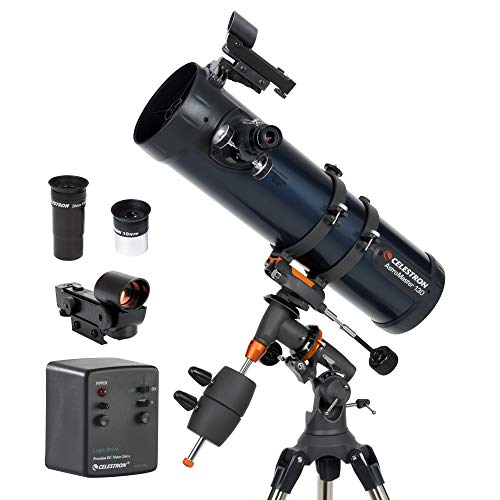
Celestron AstroMaster 130EQMD Newtonian Reflector
$428.99 price checked August 2026
Read our full AstroMaster 130EQMD review
New hobbyists should start by looking at the best telescope for beginners to find a user-friendly entry point.

How does where you buy the telescope affect the warranty?
The source of purchase determines who handles the claim and how quickly the repair process moves through the supply chain.
Buying direct from the maker usually provides the most straightforward path for a claim, as the manufacturer manages the repair directly without a middleman. This often results in the fastest turnaround for complex optical repairs.
Understanding how much light reaches your eye is easy when you learn about required telescope aperture for different objects.
Authorized retailers provide a secondary layer of support where the store may act as a collection point or a liaison for the manufacturer. These retailers are vetted to ensure they follow the correct shipping and handling procedures required to maintain the warranty.
Marketplace sellers, such as those on large third-party platforms, can complicate a claim because the seller may not be authorized to provide manufacturer support. If the seller is not the manufacturer, you may have to ship the unit to a different country or a different facility to seek a repair.
Refurbished or open-box sellers typically offer a much shorter warranty, often limited to 30 to 90 days, and may only cover the item’s functionality rather than the optical integrity of the glass. You should verify if the original manufacturer’s warranty transfers to a second owner in these cases.
Importers or grey-market sellers often provide no manufacturer warranty at all, as the product was not intended for sale in your specific region. In these instances, any repair work is usually limited to what the seller chooses to provide locally, which may not include replacement of internal components.
What actions void a telescope warranty?
Specific actions void a telescope warranty by moving the cause of failure from a manufacturing defect to a user-induced event.
Modifying the telescope’s structure, such as drilling new holes for accessories or altering the mount’s geometry, immediately voids the warranty. This includes any unauthorized electrical modifications to the GoTo system or the addition of non-standard motors.
If a traditional tube feels too bulky, you might explore various telescope alternatives that offer similar celestial views.
Failure to follow the balancing requirements of the telescope can void the warranty. If a mount’s gears are stripped or its motors burn out because the weight of the telescope was not properly distributed, the manufacturer will likely classify this as improper use.
Exposing the optics to prohibited environments, such as high-salinity coastal air without proper protection or extreme moisture, voids the warranty. Corrosion on the internal mechanical parts or “clouding” of the mirrors due to environmental exposure is rarely covered.
Transporting the telescope in a manner that allows the primary mirror to shift or the tube to flex beyond its design limits voids the warranty. If the mirrors are not secured during transit and become misaligned or cracked, the claim will be denied as a shipping error.
What should you do before buying to ensure a future claim works?
Taking specific steps before the telescope arrives ensures that you have the evidence and documentation needed to prove a manufacturing defect.
- Record a video of the telescope’s initial setup and alignment to document its condition upon arrival.
- Keep the original packaging and all internal foam inserts, as many manufacturers require original packing for return shipping.
- Take a clear photo of the serial number on the mount and the optical tube before the first use.
- Save a digital copy of the specific warranty document provided at the time of purchase, as online terms can change.
- Document the “out of the box” performance, including a photo of the view through the eyepiece to establish a baseline.
When is an extended warranty worth it for a telescope?
An extended warranty is worth it if you are purchasing a high-end motorized mount or a complex Schmidt-Cassegrain telescope where electronic and mechanical failures are costly to repair. It is a useful safety net for complex systems where a single motor failure could render the entire unit unusable.
An extended warranty is not worth it for simple, manual-mount refractors or basic Dobsonian telescopes. Because these instruments have very few moving parts and no complex electronics, the risk of a mechanical failure is low, and the cost of a simple repair is usually less than the price of a multi-year service plan.