For most golf laser rangefinder applications, a measurement speed between 200 ms and 500 ms is the target range for reliable performance. Professional-grade requirements typically demand speeds under 200 ms to minimize the gap between aiming and receiving a distance reading.
Recommended Measurement Speed by Golf Use Case
| Use Case | Recommended Measurement Speed | Why this number |
|---|---|---|
| Casual Play | 400 ms – 600 ms | Standard recreational play allows for a slight delay while the user maintains their stance. |
| Tournament Play | 200 ms – 400 ms | Faster speeds reduce the risk of the target moving or the player’s stance shifting during the calculation. |
| Competitive Tour Level | Under 200 ms | Professional requirements prioritize immediate feedback to maintain a consistent rhythm and rapid club selection. |
| Dense Vegetation Areas | 300 ms – 500 ms | Complex environments require more processing time for the device to distinguish the flag from nearby foliage. |
Products in this category with a full review here
Prices across these 3 run from $109.99 to $149.99; each one has a full review here.
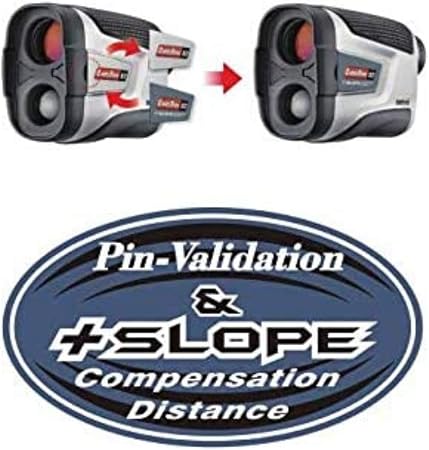

Callaway 350TL Laser Golf Rangefinder
$149.99 price checked August 2026
Read our full Callaway 350TL review
If you are on a budget, browse the best golf laser rangefinder for tournament play under $450.

What Happens if You Under-Provision or Over-Buy Measurement Speed?
Under-provisioning occurs when a golf laser rangefinder has a measurement speed exceeding 600 ms. At these speeds, the time between pressing the button and seeing the distance can cause a break in the user’s concentration. If the device takes too long to process, a player might subconsciously shift their weight or move the unit, which can lead to a “Target Misidentification” where the laser locks onto a tree or shrub instead of the flagstick.
The Risk of High Latency
High latency creates a disconnect between the physical act of aiming and the digital output. If the measurement speed is too slow, the user may feel the device is “hunting” for the target. This delay often leads to repeated measurements, which can drain the battery faster and increase the likelihood of the laser hitting a secondary object as the user tries to steady their aim.
The Cost of Over-Buying Speed
Over-buying refers to paying a premium for sub-200 ms speeds when the user does not require them. While faster processing is technically superior, the difference in actual performance on a standard golf course is often negligible for non-professional users. A device that measures in 250 ms provides a nearly identical experience to one measuring in 150 ms, yet the latter often carries a significantly higher price point due to the advanced processors required.
You should also consider the maximum range for golf laser rangefinders to ensure you cover every hole.
In this context, over-buying is a waste of budget. If your goal is to identify a flagstick at 1000 Yards, a 300 ms measurement speed is more than sufficient to provide a reliable reading. Spending extra on extreme speed gains may provide no tangible benefit to your score or your experience on the course.
The Mistake Most Buyers Make with Measurement Speed
The most common mistake is prioritizing a low ms number over the quality of the optical glass and the accuracy of the internal sensor. A golf laser rangefinder with a 150 ms measurement speed is useless if the lens cannot clearly resolve a flagstick at distance or if the sensor produces inconsistent readings.
Prioritizing Optics Over Speed
Measurement speed is a secondary metric to optical clarity. You should optimize for the ability of the device to distinguish a flagstick from a nearby tree. If the optics are poor, the device will struggle to “lock” on the target regardless of how fast the processor is. A slower measurement speed paired with high-quality glass provides a more reliable result than a fast processor paired with low-quality optics.
Focus on the hardware that facilitates the measurement first. The sensor must be able to differentiate the flagstick from the terrain. Once the device has a clear “lock,” the speed at which it delivers that number becomes a matter of preference rather than a requirement for accuracy.
How Measurement Speed Interacts with Other Deciding Specs
Measurement speed does not exist in a vacuum; it is limited by the complexity of the environment and the technology used for target identification. A high measurement speed is often wasted if the device lacks advanced software logic to handle difficult conditions.
The Impact of Pinseeker Technology
Pinseeker technology is the software logic used to distinguish a flagstick from nearby trees or terrain. If a golf laser rangefinder uses sophisticated pinseeking algorithms, the measurement speed may naturally be slightly higher because the processor is performing more complex calculations. You should not view a slightly higher ms count as a failure if the device is successfully filtering out surrounding obstacles.
The Interaction with Range
As distance increases, the difficulty of the measurement increases. A device may perform very quickly at 100 Yards but slow down significantly at 400 Yards as it processes more data to maintain accuracy. The most important metric is the measurement speed at the distances you actually play. If a device maintains a consistent 300 ms speed up to 500 Yards, it is a high-performing unit.
Environmental Impacts on Speed
Factors like lens fogging or extreme temperatures can affect how the device processes data. If a unit is not properly sealed, moisture can interfere with the sensor’s ability to get a clean reading, causing the measurement speed to fluctuate or fail entirely. Ensure the device is rated for the environments you play in, as hardware durability is a prerequisite for consistent measurement speed.
The rest of our Golf Laser Rangefinder guides
- Golf Laser Rangefinders for Tournament Play Under $450 Compared
- Choosing the Best Golf Laser Rangefinder for Gift Giving
- Best Golf Laser Rangefinders for Beginners
- Golf Laser Rangefinders with Slope Mode Compared
- Choosing the Best Golf Laser Rangefinder for Accuracy
- The Golf Laser Rangefinders That Work Best for Long Distances