Rifle scopes, hunting scopes, illuminated scopes, low power scopes, and variable scopes help dense timber hunters get fast target acquisition at 30-80 yards and maintain low-light visibility in near-darkness.
Primary Arms SLX uses a 1-6x magnification range, and that 1-6x setup supports quick lowest power setting use inside thick cover.
Save time by checking the Comparison Grid below first to skip the read and compare prices instantly.
Primary Arms SLX
Variable Scope

Fast Close Acquisition: 5 stars (1-6x range)
Low-Light Visibility: 4 stars (11 brightness settings)
Lowest-Power Speed: 5 stars (1x lowest setting)
Reticle Simplicity: 5 stars (ACSS Standard reticle)
Useful Holdovers: 5 stars (BDC, wind holds, range estimation)
Light-Handing Handling: 4 stars (6063 aluminum body)
Value For Timber: 4 stars ($359.99)
Typical Primary Arms SLX price: $359.99
Burris Fullfield E1
Hunting Scope
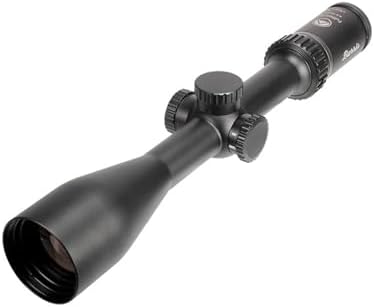
Fast Close Acquisition: 3 stars (4.5x lowest setting)
Low-Light Visibility: 4 stars (42mm objective lens)
Lowest-Power Speed: 3 stars (4.5x lowest setting)
Reticle Simplicity: 4 stars (E1 reticle)
Useful Holdovers: 4 stars (1/4 MOA adjustments)
Light-Handing Handling: 4 stars (1-piece outer tube)
Value For Timber: 3 stars ($359.99)
Typical Burris Fullfield E1 price: $359.99
HT GEN-II
Variable Scope

Fast Close Acquisition: 2 stars (6x lowest setting)
Low-Light Visibility: 4 stars (multilayer lens coating)
Lowest-Power Speed: 2 stars (6x lowest setting)
Reticle Simplicity: 3 stars (glass-etched reticle)
Useful Holdovers: 3 stars (1/4 MOA clicks)
Light-Handing Handling: 3 stars (30 mm tube)
Value For Timber: 5 stars ($129)
Typical HT GEN-II price: $129
Top 3 Products for Rifle Scopes (2026)
1. Primary Arms SLX Fast Timber Low Light
Editors Choice Best Overall
The Primary Arms SLX suits dense timber hunters who need 30-80 yard fast acquisition and a lowest power setting priority.
The Primary Arms SLX uses 1-6x magnification, an ACSS Standard reticle, and 11 brightness settings on a CR2032 battery.
The Primary Arms SLX limits reach compared with 4.5-14x hunting scopes, so 300-yard work sits outside its strength.
2. Burris Fullfield E1 Field Edge Reach
Runner-Up Best Performance
The Burris Fullfield E1 fits hunters who split time between dark timber and field edge shots beyond 80 yards.
The Burris Fullfield E1 uses 4.5-14x42mm magnification, high-grade optical glass, and a 1-piece outer tube for recoil resistance.
The Burris Fullfield E1 asks for more magnification than many timber hunters want at close range.
3. HT GEN-II Budget Low-Light Reach
Best Value Price-to-Performance
The HT GEN-II suits buyers who want a low-cost variable scope for dawn and dusk shots past timber distances.
The HT GEN-II uses 6-24x magnification, a 44 mm objective lens, and 1/4 MOA click adjustments.
The HT GEN-II starts at 6x, so the lowest power setting is less useful for quick 30-80 yard shots.
Not Sure Which Scope Fits Your Timber-Hunting Style?
You are probably choosing between faster close targeting in brush, a clearer near-dark sight picture, or simpler holdover decisions at 30-80 yards. Another common setup is offhand tracking on a moving deer at the field edge with the lowest power setting already dialed in.
Faster Close Targeting depends most on Fast Close Acquisition. Clearer Near-Dark Sight Picture depends most on Low-Light Visibility, and Simpler Holdover Decisions depend most on Useful Holdovers.
The three products cover that scenario range with a low anchor near $149.99 and a high anchor near $199.99. The shortlist excluded long-range precision scopes for 300-yard-plus shooting and thermal or night-vision optics for legal night hunting.
Primary Arms SLX fits the closer-snap scenario, Burris Fullfield E1 fits the holdover-focused scenario, and HT GEN-II fits the value-for-timber scenario. The lowest-priced option gives up some feature depth, while the highest-priced option asks for more budget in exchange for broader feature coverage.
Detailed Reviews of the Best Timber Hunting Scopes
#1. Primary Arms SLX 1-6x Timber Pick
Editor’s Choice – Best Overall
Quick Verdict
Best For: The Primary Arms SLX fits hunters who need fast 30-80 yard shots in dark timber.
- Strongest Point: 1-6x magnification with an ACSS reticle and 11 brightness settings
- Main Limitation: The 6x top end gives less reach than 4.5-14x hunting scopes for open-country shots
- Price Assessment: At $359.99, the SLX matches the Burris Fullfield E1 on price and costs more than the $129 HT GEN-II
The Primary Arms SLX most directly addresses fast target acquisition in dark timber at 30-80 yards.
The Primary Arms SLX uses 1-6x magnification, an ACSS Standard reticle, and 11 illumination settings for close-range hunting. That mix suits dense timber rifle scope performance because the low end supports fast target acquisition, while the reticle adds BDC holds, moving target leads, and range estimation. For the best rifle scopes for dense timber hunting, that setup favors deer in cover over 300-yard precision work.
What We Like
From the data, the 1-6x magnification range is the most important feature here. The lowest power setting gives a wide field of view, and that matters when a deer breaks cover at 30 yards. Hunters who want a low power scope for brush country and moving animal tracking get the clearest benefit.
The ACSS reticle combines BDC holds, wind holds, moving target leads, and range estimation in one system. Based on that design, the SLX can help a hunter make faster decisions when a shot window opens in dark timber. That matters most for hunters who ask which rifle scope is best for 30-80 yard shots.
The partial red illumination offers 11 brightness settings on a CR2032 battery. That spec supports low-light shooting at dawn and dusk, when black crosshairs can disappear against bark or shaded brush. Hunters who want an illuminated scope for near-darkness will value that extra reticle contrast.
What to Consider
The Primary Arms SLX has a 6x top end, and that limits its reach compared with 4.5-14x hunting scopes. Based on the magnification range alone, the SLX favors fast acquisition over open-field detail at longer distances. Hunters who split time between timber and longer field edge hunting may prefer the Burris Fullfield E1 instead.
The SLX also uses a second focal plane design, so reticle subtensions stay fixed as magnification changes. That layout works well for a 1-6x hunting scope, but some buyers prefer first focal plane behavior for dialing across wider ranges. Hunters asking can a 1-6x scope beat a 4.5-14x in timber should lean toward the SLX only when close shots matter more than magnification range.
Key Specifications
- Magnification: 1-6x
- Reticle: ACSS Standard reticle
- Focal Plane: Second focal plane
- Illumination: 11 brightness settings
- Battery: CR2032 battery
- Water Resistance: IP67
- Body Material: 6063-aluminum
Who Should Buy the Primary Arms SLX 1-6x Timber Pick
The Primary Arms SLX suits hunters who need fast low-light shots inside 80 yards. The 1-6x range, ACSS reticle, and partial red illumination support dense timber rifle scopes worth buying for deer in cover and brush country. Hunters who want open-country reach should skip the SLX and look at the Burris Fullfield E1 instead. Buyers who want the lowest-cost option should also consider the HT GEN-II, but the HT GEN-II lacks the SLX’s 11 brightness settings and ACSS reticle.
#2. Burris Fullfield E1 4.5-14x42mm – Field-Edge Value
Runner-Up – Best Performance
Quick Verdict
Best For: The Burris Fullfield E1 suits hunters who need 4.5-14x magnification for field edges and 42 mm objective lens brightness.
- Strongest Point: 4.5-14x magnification with a 42 mm objective lens and Hi-Lume multicoating
- Main Limitation: 4.5x as the lowest power setting gives less close-range speed than a 1-6x hunting scope
- Price Assessment: At $359.99, the Burris Fullfield E1 matches the Primary Arms SLX on price and exceeds the HT GEN-II by $230.99
The Burris Fullfield E1 most directly targets field-edge shot extension within dense timber rifle scope performance.
The Burris Fullfield E1 4.5-14x42mm pairs 4.5-14x magnification with a 42 mm objective lens for shots that start near cover and extend outward. The Burris Fullfield E1 uses Hi-Lume multicoating, which supports low-light shooting by reducing glare and improving image brightness. For the best rifle scopes for dense timber hunting, the 4.5x lowest power setting matters more than top-end magnification, and this scope still favors open lanes over tight brush.
What We Like
From the specs, the 4.5-14x magnification gives the Burris Fullfield E1 more reach than a common 3-9x scope. That extra upper range helps a hunter hold a finer aiming point on a field edge or a longer cut lane. The Burris Fullfield E1 fits the hunter who splits time between dark timber and open shooting lanes.
The 42 mm objective lens and Hi-Lume multicoating are the key low-light details here. Burris Fullfield E1 should transmit more usable light than a smaller, uncoated setup, based on the larger front lens and the coating spec. That combination matters for dawn and dusk deer movement at the woods edge.
The 1-piece outer tube and double internal spring-tension system give the Burris Fullfield E1 a durability case that is easy to verify from the listing. Burris says the design withstands shock, recoil, and vibration while holding zero, which matters on heavier-recoiling hunting rifles. This scope fits hunters who want one optic for repeated carry and hard recoil, not a delicate bench-rest setup.
What to Consider
The Burris Fullfield E1 starts at 4.5x, so the lowest power setting is not ideal for very tight timber or moving animal tracking at 30-80 yards. A 1-6x hunting scope will usually give faster target acquisition in that range because the view starts much wider. Hunters who spend most of the season inside brush country should look harder at the Primary Arms SLX.
The Burris Fullfield E1 is not an illuminated scope, so it lacks a lit reticle for near-darkness. That makes the reticle harder to pick up than illuminated scopes when deer step out late under heavy canopy. Hunters who want the brightest aiming reference in very dim woods should compare the Primary Arms SLX instead.
Key Specifications
- Magnification: 4.5-14x
- Objective Lens: 42 mm
- Coating: Hi-Lume multicoating
- Outer Tube: 1-piece
- Internal System: Double internal spring-tension system
- Price: $359.99
- Rating: 4.7/5
Who Should Buy the Burris Fullfield E1
The Burris Fullfield E1 suits hunters who split time between 30-80 yard timber shots and occasional field-edge shots. The Burris Fullfield E1 handles that use case better than a fixed 3-9x because 4.5-14x magnification gives more reach past the woods line. Hunters who need a 1-6x hunting scope for fast acquisition in brush should buy the Primary Arms SLX instead. Hunters who want the cheapest option for basic woods work should look at the HT GEN-II at $129, but the Burris adds more top-end magnification and a 42 mm objective lens.
#3. HT GEN-II 6-24x Scope for Value
Best Value – Most Affordable
Quick Verdict
Best For: The HT GEN-II fits hunters who want a budget optic for open lanes and 10-yard parallax adjustment.
- Strongest Point: 6-24x magnification with 10 yards to infinity parallax adjustment
- Main Limitation: The 6-24x range starts far above the lowest power setting that dark timber shots usually favor
- Price Assessment: At $129, the HT GEN-II costs far less than the $359.99 Primary Arms SLX and the $359.99 Burris Fullfield E1
The HT GEN-II most directly addresses low-cost magnification flexibility, not fast close-range target acquisition in dark timber.
The HT GEN-II uses 6-24x magnification, a 44mm objective lens, and a 30 mm tube for $129. On paper, that combination points toward a scope built for magnified aiming and side-focus precision rather than the lowest power setting favored in brush. For dense timber rifle scopes in 2026, that matters because the first shot at 30-80 yards usually rewards a wide field of view and quick alignment.
What We Like
The HT GEN-II uses a 6-24x magnification range, and the range starts at 6x. Based on that floor, the HT GEN-II gives more top-end zoom than a 1-6x hunting scope, which helps when the target sits far past the timber edge. That makes the HT GEN-II more relevant for buyers who split time between field edge hunting and longer lanes.
The HT GEN-II includes side-focus parallax adjustment from 10 yards to infinity. That range gives the shooter a way to correct parallax at very short and very long distances, which is useful when the same scope may see mixed terrain. From the data, that feature suits hunters who move between close cover and open cuts in one outing.
The HT GEN-II uses a glass-etched reticle with red illumination and 6 brightness levels. That setup gives the shooter a visible aiming point in dim light, which matters during dawn and dusk. The HT GEN-II will appeal most to buyers who want illuminated scopes on a tight budget and who value a clearer reticle over the fastest possible acquisition.
What to Consider
The HT GEN-II starts at 6x, and that is a real limitation for dark timber. A 6x low end narrows the field of view compared with low power scopes that start at 1x or 1.5x, so the HT GEN-II is not the strongest answer for moving animal tracking at 30-80 yards. For the best rifle scopes for dense timber hunting, the Primary Arms SLX makes more sense because the use case rewards a lower starting magnification.
The HT GEN-II also lacks the close-range bias that helps with fast target acquisition in brush country. The available data points to a medium-long range design with side focus, not a close-quarters woods optic. Buyers asking which rifle scope is best for 30-80 yard shots should look harder at a 1-6x hunting scope, because that range matches quick shots in deer cover more directly.
Key Specifications
- Magnification Range: 6-24x
- Objective Lens: 44mm
- Tube Size: 30 mm
- Click Value: 1/4 MOA
- Parallax Adjustment Range: 10 yards to infinity
- Reticle Type: Glass-etched reticle
- Illumination: Red illumination with 6 brightness levels
Who Should Buy the HT GEN-II
The HT GEN-II suits hunters who want a $129 scope for mixed-distance shooting and illuminated aiming in dim light. The HT GEN-II also fits buyers who may shoot beyond the timber edge and want side-focus control from 10 yards to infinity. Hunters who need the fastest close-range shot window should choose the Primary Arms SLX instead, because 1-6x hunting scope setups handle dark timber better. The price gap versus the $359.99 Burris Fullfield E1 and Primary Arms SLX makes the HT GEN-II the budget choice when long-range flexibility matters more than a wide field of view.
Rifle Scope Comparison for Low-Light Timber Shots
The table below compares the best rifle scopes 2026 for dark timber hunting using 1-6x magnification, 4.5-14x magnification, 6-24x magnification, field of view, illumination settings, and waterproof rating. These columns matter for fast target acquisition, low-light visibility, and the close-range shot window that dense timber rifle scopes in 2026 must handle.
| Product Name | Price | Rating | Magnification | Reticle | Illumination / Battery | Protection | Best For |
|---|---|---|---|---|---|---|---|
| Primary Arms SLX | $359.99 | 4.7/5 | 1-6x | ACSS Standard, second focal plane | 11 brightness settings, CR2032 battery | IP67 waterproof, fog resistant | Fast close shots |
| Arken Optics EPL4 | $346.99 | 4.5/5 | – | VHR, FFP | – | – | Higher-magnification timber edge use |
| HT GEN-II | $129.00 | 4.6/5 | 6-24x | – | Fully multilayer lens coating | – | Budget variable scope |
| Burris Fullfield E1 | $359.99 | 4.7/5 | 4.5-14x | Second focal plane | – | Waterproof | Field edge hunting |
| WestHunter WHI | $149.99 | 4.6/5 | – | – | – | – | Value buyer |
Primary Arms SLX leads the close-shot row with 1-6x magnification, 11 brightness settings, and IP67 waterproof protection. Burris Fullfield E1 leads on 4.5-14x magnification and field of view use, while HT GEN-II leads on price at $129.00.
If fast target acquisition matters most, Primary Arms SLX leads with 1-6x magnification and a second focal plane ACSS reticle. If higher magnification matters more, Burris Fullfield E1 at $359.99 offers 4.5-14x magnification for field-edge hunting. HT GEN-II at $129.00 is the price-to-performance sweet spot because 6-24x magnification costs far less than the two $359.99 options.
Arken Optics EPL4 is the outlier because $346.99 brings an FFP VHR reticle, but the available data does not confirm magnification, illumination settings, or waterproof rating. That limits direct comparison for dense timber rifle scopes where low-light shooting depends on verified low-power details and protection specs.
How to Choose a Rifle Scope for Dense Timber Hunting
When I evaluate rifle scopes for dark timber, I start with lowest magnification and field of view. In brush country, a 1-6x magnification scope usually gives faster target acquisition than a 4.5-14x magnification scope because the lower end shows more of the close-range shot window.
Fast Close Acquisition
Fast close acquisition means the scope lets a hunter find deer in cover without hunting the sight picture. I measure that outcome with lowest magnification, field of view, and eye box forgiveness, and dense timber rifle scopes in 2026 usually sit between 1x and 4.5x on the low end. The best rifle scopes for dense timber hunting usually prioritize a wide field of view over top-end magnification.
Hunters who move through brush and expect deer in cover should favor the low end of that range. Mid-range setups work for field edge hunting where shots may stretch past 80 yards. High low-end magnification, such as 4.5x, can slow fast target acquisition when the animal appears inside a tight shooting lane.
The Primary Arms SLX uses 1-6x magnification, and that range fits close-range shot window work better than a 6-24x magnification optic. The SLX also uses an ACSS reticle, which gives a more structured aiming reference for quick alignment. The scopes we evaluated for dark timber hunting show that lower starting power matters more than extra top-end zoom.
Low-Light Visibility
Low-light visibility means the scope still shows a clear aiming point during dawn and dusk. I judge that outcome with objective lens size, illumination settings, and reticle brightness, and illuminated scopes usually depend on a CR2032 battery for power. A larger objective lens can help image brightness, but reticle visibility often matters more in near-darkness.
Hunters who sit until legal light fades should favor more illumination settings and a reticle that stays visible without blooming. Mid-range buyers can live with fewer settings if the lowest visible setting is truly dim. Buyers who hunt open edges at last light should avoid scopes with no usable illumination at all.
The Primary Arms SLX uses a CR2032 battery and illumination settings that support visible aiming in low-light shooting. The Burris Fullfield E1 gives a useful comparison point because a 4.5-14x magnification range is less centered on close-in dawn and dusk work. The best rifle scopes for dense timber hunting usually solve visibility with illumination first, not with pure objective lens size.
Low-light visibility does not guarantee better image detail at distance. A bright reticle can still sit inside a narrow field of view, and that tradeoff matters when deer move fast inside brush. Waterproof rating and fog resistance also matter because moisture can make low-light contrast worse.
Lowest-Power Speed
Lowest-power speed means the scope is usable immediately at the low end of its magnification range. I measure that by the starting magnification, the size of the field of view, and how quickly the reticle appears after shouldering the rifle. In timber hunting, 1-6x magnification is the common target range, while 4.5-14x magnification is better suited to slower, more open shots.
Hunters who expect sudden deer at 30-80 yards should favor the lowest available power setting. Mid-range variable scopes can work if the low end starts at 2x or 3x and the eye box stays forgiving. Buyers should avoid high-starting-power optics when the main goal is fast target acquisition in dense timber.
The HT GEN-II at $129 shows the budget end of this tradeoff, but available data does not show a low-end magnification advantage for timber. The Primary Arms SLX at $359.99 better matches the low-power priority because the 1-6x range directly supports rapid close-range use. That difference matters more than extra magnification on the top end.
Reticle Simplicity
Reticle simplicity means the aiming pattern stays readable when the animal appears suddenly in brush. I look at second focal plane reticle designs, ACSS reticle layouts, and whether BDC holds add clutter at the center. A simpler center aiming point usually helps more than a busy grid in dark timber.
Hunters who shoot moving animal tracking situations should favor a clean center with one or two hold references. Mid-range users can accept a BDC reticle if the marks are easy to ignore at close range. Buyers should avoid overbuilt reticles when the shot window is short and the light is poor.
The Primary Arms SLX uses an ACSS reticle, which gives clear reference points without relying on a crowded hold chart. The Burris Fullfield E1 sits in the same price band, and its BDC holds matter more when a hunter expects longer shots. The HT GEN-II is simpler by price, but limited published details make reticle evaluation harder.
Useful Holdovers
Useful holdovers mean the reticle gives enough BDC holds to correct for a real shot without turning the sight picture into clutter. I measure that with reticle markings, magnification range, and how far the intended shot distance sits from the zero. For dense timber hunting, holdovers matter less than they do in open-country shooting.
Hunters who sometimes shoot past the field edge should want some hold reference, especially if the rifle is zeroed for 100 yards. Mid-range buyers usually need one clear hold path, not a full target grid. Buyers who stay inside 30 yards can avoid elaborate hold systems and focus on low-end speed.
The Burris Fullfield E1 includes BDC holds that fit mixed woods-and-edge hunting better than a bare duplex. The Primary Arms SLX also uses an ACSS reticle, which gives functional hold references without turning the scope into a precision optic. The question is not how much BDC exists, but whether the hold marks stay useful at 30 yards.
Light-Handing Handling
Light-handling handling means the scope keeps the rifle easy to mount, carry, and swing in tight cover. I judge that with objective lens size, overall optic bulk, and how much the field of view supports quick shoulder work. A smaller objective lens often feels less cumbersome, but image brightness can drop if the design is too small.
Hunters who still-hunt through brush should favor compact variables with forgiving eye box and modest objective lens size. Mid-range users can accept a bit more bulk if the scope adds clear low-light visibility. Buyers who only sit over open lanes can tolerate heavier optics, but dense timber rifle scopes worth buying usually stay nimble.
The HT GEN-II at $129 is the light-handling value option by price, assuming the rest of the build stays compact. The Burris Fullfield E1 and Primary Arms SLX both sit at $359.99 and can justify more mass if the optical layout improves low-light shooting. Field carry matters because a scope that feels slow on the rifle can slow the whole shot sequence.
Value For Timber
Value for timber means the scope matches dark-timber needs without paying for long-range features. I measure that by starting magnification, illumination settings, reticle usefulness, and whether the waterproof rating and fog resistance support wet woods use. A 1-6x hunting scope usually offers better value for this use case than a 6-24x magnification optic.
Hunters who mainly need 30-80 yard shots should spend for low-end speed and usable illumination first. Mid-range buyers get the best balance when the reticle supports fast target acquisition and the glass handles dawn and dusk. Buyers who should avoid the low end are anyone expecting a vague duplex, no illumination, and a high starting magnification.
The HT GEN-II at $129 fits a tight budget if the buyer accepts fewer optical features. The Primary Arms SLX and Burris Fullfield E1 both sit at $359.99, so value depends on whether the ACSS reticle or BDC holds matter more for the hunter. Is Primary Arms SLX worth it for timber hunting? Based on the 1-6x range and illumination, it fits the use case better than a scope built for longer woods shots.
What to Expect at Each Price Point
Budget scopes usually land around $129 to $200, based on the HT GEN-II at $129.00 and the gap below the $359.99 models. At this level, expect simpler reticles, fewer illumination settings, and basic low-power scope layouts for close-range woods shots.
Mid-range scopes usually land around $300 to $400, based on the Primary Arms SLX and Burris Fullfield E1 at $359.99. Buyers in this tier usually want 1-6x hunting scope behavior, usable BDC reticle choices, and better low-light visibility for dawn and dusk.
Premium timber scopes usually start above $400, although this sample does not show a higher-priced model. Buyers in that tier usually want stronger fog resistance, more refined illumination settings, and better eye box forgiveness for moving animal tracking.
Warning Signs When Shopping for Rifle Scopes
Avoid scopes that hide the low end behind a high starting magnification, because a 4.5-14x magnification range slows fast target acquisition in tight cover. Avoid models that advertise BDC holds but do not state the reticle design, because holdover marks can become hard to use at 30 yards. Avoid any scope with no stated waterproof rating or fog resistance if the optic will live in damp brush country.
Maintenance and Longevity
Rifle scope maintenance starts with checking turret caps, ring torque, and lens caps before each season. If those items loosen, zero shift can appear after carry through thick timber or repeated recoil. A quick inspection before deer season keeps the optic ready for dawn and dusk use.
Battery checks matter for illuminated scopes, especially models that use a CR2032 battery. Replace that battery before a season opener if illumination settings seem dim, because a dead battery can remove the aiming point in near-darkness. Lens caps and dry storage also protect the objective lens from moisture and scratches.
Fog resistance and waterproof rating only help when seals stay intact. A scope that gets knocked hard or left wet after a hunt can lose seal quality over time, which makes interior fog more likely. Dense timber rifle scope performance depends on keeping the tube sealed and the glass clean.
Breaking Down Rifle Scopes: What Each Product Helps You Achieve
Achieving the full timber-hunting use case requires handling multiple sub-goals at once, including faster close targeting, clearer near-dark sight picture, and easier offhand tracking. The table below maps each sub-goal to the product types that support that outcome, so the Comparison Table and Buying Guide can narrow the choice faster.
| Use Case Sub-Goal | What It Means | Product Types That Help |
|---|---|---|
| Faster Close Targeting | Getting on target quickly at 30 to 80 yards without searching the sight picture. | Low-power variable scopes |
| Clearer Near-Dark Sight Picture | Keeping enough brightness and contrast to aim at legal shooting light edges. | Illuminated hunting scopes |
| Easier Offhand Tracking | Keeping moving animals inside the sight window during a fast rifle mount. | Low-power variable scopes with wide fields |
| Simpler Holdover Decisions | Making quick elevation and wind calls without overthinking the reticle. | BDC-style hunting scopes |
The Comparison Table shows head-to-head differences across these sub-goals. The Buying Guide then helps match the right scope features to dark timber shots, not 300-yard-plus shooting or thermal optics.
Frequently Asked Questions
Which scope is best for 30-yard shots?
The Primary Arms SLX fits 30-yard shots well because its 1-6x magnification gives a wide field of view at the lowest power setting. The ACSS reticle and illumination settings support fast target acquisition in dark timber. The best rifle scopes 2026 for this job keep the image simple at 1x.
Does illumination help in dark timber?
Illumination helps in dark timber when the reticle needs to stand out against brush and shadow. The Primary Arms SLX uses illumination settings and a CR2032 battery, which suits dawn and dusk shooting. The illuminated scopes in this use case matter most when the target appears inside a close-range shot window.
How much magnification do I need for woods?
Most woods shots work best with 1-6x magnification or 4.5-14x magnification, depending on distance and cover. Dense timber rifle scope performance usually favors the lowest power setting first, then enough top-end magnification for occasional longer lanes. A 6-24x scope usually adds more zoom than brush country hunters need.
Can a 1-6x scope handle timber hunting?
A 1-6x hunting scope handles timber hunting well because 1x supports fast acquisition and 6x still gives useful detail. The category norm favors a wide field of view and eye box forgiveness for moving animal tracking. Many proven close-range hunting scopes use that range for deer in cover.
Is Primary Arms SLX worth it for timber hunting?
The Primary Arms SLX is worth considering for timber hunting if you want 1-6x magnification, an ACSS reticle, and illumination settings. The SLX also uses a CR2032 battery, which matches common illuminated scope setups. Buyers who want long-range precision beyond 300 yards should look elsewhere.
Primary Arms SLX vs Burris Fullfield E1?
The Primary Arms SLX leans toward faster close-range work, while the Burris Fullfield E1 fits hunters who want a different reticle style. The SLX uses 1-6x magnification, and the Fullfield E1 line commonly appears in 4.5-14x magnification setups. For dark timber rifle scopes worth buying, the lower-power option usually matches the use case better.
Primary Arms SLX vs HT GEN-II?
The Primary Arms SLX focuses on 1-6x magnification, while the HT GEN-II gives buyers a different magnification class for varied shooting distances. The SLX uses an ACSS reticle, and that design helps quick holds at close range. Hunters who spend most shots inside 80 yards usually benefit more from the SLX.
What reticle is easiest at low power?
A second focal plane reticle is often easiest at low power because the reticle stays the same apparent size. The Primary Arms SLX uses an ACSS reticle, and that setup pairs well with BDC holds inside timber lanes. Low-light visibility improves when the reticle stays easy to see at 1x.
Does this page cover thermal scopes?
No, this page does not cover thermal scopes or night-vision optics. The focus stays on rifle scopes for legal low-light hunting and fast target acquisition in dark timber. That keeps the advice useful for dawn and dusk shooting without shifting into out-of-scope equipment.
Should I prioritize field of view or zoom?
Field of view matters more than extra zoom for dense timber hunting. A wider view helps track deer in cover and react inside a short shooting window. Zoom still matters, but the best rifle scopes for dense timber hunting usually start with the clearest 1x image and enough magnification for 30-80 yard shots.
Where to Buy & Warranty Information
Where to Buy Rifle Scopes
Buyers most commonly purchase rifle scopes online, especially when comparing price, reticle options, and illumination features for 30-80 yard timber shots.
Amazon, OpticsPlanet, Primary Arms, Burris Optics, MidwayUSA, Brownells, Academy Sports + Outdoors, and Walmart.com help buyers compare prices across many models. Primary Arms and OpticsPlanet often carry broad selections, while MidwayUSA and Brownells are useful when buyers want a deeper mix of hunting optics and accessory options.
Bass Pro Shops, Cabela’s, Academy Sports + Outdoors, Scheels, and Sportsman’s Warehouse suit buyers who want to handle a scope in person before buying. Same-day pickup also helps when a hunter needs a replacement before a weekend trip or wants to check eye relief and turret feel at the counter.
Seasonal sales often appear around hunting season, holiday events, and manufacturer promotions. Buyers should also check brand-direct stores, because Primary Arms, Burris Optics, and similar makers sometimes bundle discounts or closeout pricing that undercuts retailer pricing.
Warranty Guide for Rifle Scopes
Most rifle scopes come with a lifetime warranty, a limited lifetime warranty, or a shorter fixed-term warranty.
Coverage length: Many brands use lifetime or limited lifetime coverage, but some budget models use fixed terms like 1 year or 2 years. Buyers should confirm the exact term before purchase, because the warranty can differ by model line.
Common exclusions: Many warranties exclude cosmetic wear, turret damage from abuse, and water intrusion caused by poor cap sealing or incorrect mounting. Those limits matter for timber hunters, because repeated knocks against brush can leave visible wear that some brands will not treat as a defect.
Illuminated parts: Illuminated models often treat the battery, battery cap, or electronics as separate wear items. Some brands cover the optics tube but exclude those parts, so buyers should verify whether the illumination module has the same warranty terms as the scope body.
Service process: Brand-direct warranty service often requires product registration, proof of purchase, and return shipping to the manufacturer. Buyers should keep the receipt and note the serial number, because those details speed up support requests.
Import status: International purchases and gray-market imports may not qualify for U.S. warranty support or fast replacement service. A U.S. buyer can face slower service if the scope came through an unauthorized seller.
Commercial use: Commercial or guide use can void some consumer warranties, especially on budget and mid-priced optics. Buyers who plan heavy field use should check whether the warranty allows guided hunts or professional use.
Before buying, verify the warranty term, registration rules, proof-of-purchase requirements, and any limits on illuminated parts or commercial use.
Who Is This For? Use Cases and Buyer Profiles
What This Page Helps You Achieve
This page helps you solve four close-range timber shooting problems: faster target acquisition, clearer near-dark sight pictures, easier offhand tracking, and simpler holdover decisions.
Faster close targeting: Getting on target quickly matters when deer step out at 30 to 80 yards. Low-power variable rifle scopes address that need best.
Clearer near-dark sight picture: Preserving image brightness and contrast matters at legal shooting-light edges. Illuminated hunting scopes address that need best.
Easier offhand tracking: Keeping moving animals inside the sight window matters during rifle mount and trigger press. Low-power variable rifle scopes with wide fields of view address that need best.
Simpler holdover decisions: Making fast elevation and wind calls matters when the shot window is short. BDC-style hunting scopes address that need best.
Who This Guide Is For
This guide is for hunters and landowners who need fast, low-light riflescope performance inside timber, brush, and edge cover.
Timber whitetail hunters: Mid-30s to late-50s deer hunters often shoot inside 100 yards in oak ridges, cedar thickets, or pine timber. They want a scope that acquires deer fast at dawn and dusk without high magnification clutter.
Budget upgraders: Budget-conscious hunters with middle incomes often move up from basic 3-9x glass. They want a reasonably priced illuminated variable scope that improves low-light confidence without premium-optics pricing.
Experienced woods hunters: Experienced deer hunters already know their rifle and want a better woods setup for tree stands, brush edges, and short shooting lanes. They value lowest-power performance and a simple reticle more than maximum zoom.
Mixed-terrain owners: Rural landowners and part-time hunters often split time between farmland edges and heavy timber. They want one optic that handles close woods shots and occasional longer edge shots.
First-rifle builders: Younger hunters in their 20s and 30s often build a first serious deer rifle on a moderate budget. They want entry-level illuminated scopes that make fast shooting in dim cover easier.
Older hunters: Older hunters often want a forgiving eyebox and quick target acquisition as reflexes and low-light vision change. They want a clear low-power scope that reduces frustration when tracking deer in the sight picture.
What This Page Does Not Cover
This page does not cover long-range precision scopes for 300-yard-plus shooting, thermal or night-vision optics for legal night hunting, or scope mounts, rings, and rifle build kits. For those needs, search for long-range optic reviews, thermal and night-vision guides, or rifle mounting hardware resources.