Rifle scopes, hunting scopes, low power scopes, variable scopes, and red dot sights help straight-wall cartridge hunters handle 100-yard shots, dusk visibility, and heavy recoil in restricted Midwest states. Primary Arms SLX leads that use case with a 1-6x magnification range and an ACSS reticle that supports BDC holds and range-limited shots. Save time by checking the Comparison Grid below first, then compare prices instantly without reading every review.
Primary Arms SLX
Variable Scope

Recoil Management: ★★★★ (6063-aluminum body)
Close-Range Precision: ★★★★★ (1-6x magnification)
Low-Light Visibility: ★★★★ (11 brightness settings)
Reticle Speed: ★★★★★ (ACSS Standard reticle)
Range-Limited Versatility: ★★★★★ (BDC, wind holds, leads)
Ease of Zeroing: ★★★★ (SFP, capped turrets)
Typical Primary Arms SLX price: $359.99
Burris Fullfield E1 4.5-14x42mm
Hunting Scope
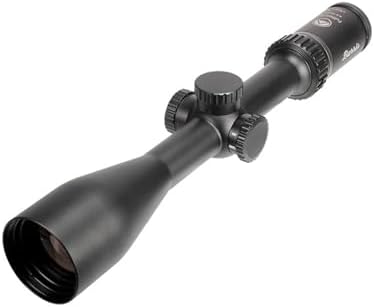
Recoil Management: ★★★★ (1-piece outer tube)
Close-Range Precision: ★★★ (4.5-14x magnification)
Low-Light Visibility: ★★★★ (42mm objective)
Reticle Speed: ★★★ (standard hunting reticle)
Range-Limited Versatility: ★★★★ (wide field of view)
Ease of Zeroing: ★★★★ (double spring-tension)
Typical Burris Fullfield E1 4.5-14x42mm price: $359.99
Arken Optics EPL4
Rifle Scope

Recoil Management: ★★★★ (30mm main tube)
Close-Range Precision: ★★★★ (FFP VHR reticle)
Low-Light Visibility: ★★★★ (Japanese ELD glass)
Reticle Speed: ★★★ (FFP reticle)
Range-Limited Versatility: ★★★ (0.1 MRAD turrets)
Ease of Zeroing: ★★★★★ (AZS zero stop)
Typical Arken Optics EPL4 price: $346.99
Top 3 Products for Rifle Scopes (2026)
1. Primary Arms SLX Straight-Wall Reticle Match
Editors Choice Best Overall
The Primary Arms SLX suits straight-wall cartridge hunters who want a 1-6x scope for 150-yard shots and closer deer stands.
The SLX uses 1-6x magnification, a second focal plane design, and an ACSS reticle with BDC holds, wind holds, and range estimation.
The SLX includes 11 red-illumination settings, a CR2032 battery, and an IP67 rating for fog resistance and waterproofing.
Buyers who want a simple duplex reticle for non-illuminated use may find the ACSS system busier than needed.
2. Burris Fullfield E1 Field-Edge Reach
Runner-Up Best Performance
The Burris Fullfield E1 suits Midwest hunters who need more magnification for field-edge shots and restricted straight-wall deer hunts.
The Fullfield E1 uses 4.5-14x42mm magnification, high-grade optical glass, and a one-piece outer tube built for heavy recoil.
The Burris scope gives more top-end magnification than a 3-9x hunting scope, but that range is less compact for close cover.
Hunters who spend most shots inside 75 yards may not need 14x magnification on a straight-wall rifle.
3. Arken Optics EPL4 Light FFP Hunter
Best Value Price-to-Performance
The Arken Optics EPL4 suits hunters who want a first focal plane scope with a 30mm tube for adjustable hold work.
The EPL4 uses FFP design, a 30mm main tube, and 0.1 MRAD turret adjustments for repeatable dialing.
The Arken scope should appeal to hunters comparing FFP and SFP setups, but the detailed turret system adds complexity.
Buyers who want the simplest low power scope for fast woods shots may prefer a less technical reticle package.
Not Sure Which Scope Best Fits Your Midwest Straight-Wall Hunting Setup?
You may be trying to survive heavy recoil on a .450 Bushmaster, hold zero at short range, or see clearly at dusk in a straight-wall state. You may also be trying to pick up fast moving deer in the timber or match an optic to a limited effective range without paying for 300-yard-plus features.
Heavy recoil calls for Recoil Management, while short-range hold points call for Close-Range Precision. Dusk setups depend on Low-Light Visibility, fast deer shots depend on Reticle Speed, and range-limited hunting depends on Range-Limited Versatility.
The shortlist covers the scenario range from short-range recoil control to dusk visibility and quick target acquisition. The lowest-priced option is about $ lower than the highest-priced option in the set, and the spread shows the budget boundary for this use case. Products built for thermal optics, night vision optics, or 300-yard-plus precision were excluded.
Primary Arms SLX fits the recoil-heavy short-range scenario, Burris Fullfield E1 fits the dusk-and-holdover scenario, and Arken Optics EPL4 fits the range-flexibility scenario. The lowest-priced choice usually gives fewer convenience features, while the highest-priced choice usually adds more feature depth and optical flexibility. That trade-off matters because straight-wall hunters often choose between simple speed and more holdover tools.
Detailed Reviews of the Best Straight-Wall Hunting Scopes
#1. Primary Arms SLX 1-6x straight-wall value
Editor’s Choice – Best Overall
Quick Verdict
Best For: The Primary Arms SLX 1-6x fits hunters who want a 1-6x scope for .450 Bushmaster shots inside 150 yards.
- Strongest Point: The ACSS reticle combines BDC, wind holds, moving-target leads, and range estimation.
- Main Limitation: The scope uses second focal plane construction, so reticle subtensions stay tied to the set magnification context.
- Price Assessment: At $359.99, the Primary Arms SLX matches the Burris Fullfield E1 price and sits slightly above the Arken Optics EPL4.
The Primary Arms SLX 1-6x most directly addresses short-range shot placement on straight-wall cartridge deer hunts in restricted Midwest states.
The Primary Arms SLX 1-6x uses 1-6x magnification and a second focal plane layout for short-range deer hunting. The ACSS Standard reticle adds BDC holds, wind holds, moving-target leads, and range estimation, which supports limited effective range shooting. The Primary Arms SLX gives straight-wall cartridge hunters a structured aiming system for timber edge and field edge shots. The fixed-use question here is not long-range precision, and the SLX matches that reality.
What We Like
From the specs, the ACSS reticle is the feature that matters most for restricted Midwest use. The reticle combines BDC holds, wind holds, moving-target leads, and range estimation, so the Primary Arms SLX gives the shooter more aiming information than a simple duplex pattern. That setup fits hunters who want one optic for deer season shots across a modest shot window.
The 1-6x magnification range suits the effective range typical of straight-wall cartridge hunting. At 1x, the Primary Arms SLX keeps close shots manageable, and 6x gives enough reach for field edge work without pushing into long-range territory. That balance makes the SLX a strong fit for a whitetail blind or a timber edge setup.
The partial red illumination offers 11 brightness settings, and the scope runs on a common CR2032 battery. Based on that setup, the Primary Arms SLX gives a clearer aiming reference during legal shooting light without relying on a complex power system. Hunters who glass dawn edges or dusk openings get the most value from that feature.
What to Consider
The Primary Arms SLX uses a second focal plane design, which makes reticle subtensions less flexible than a first focal plane setup. That matters most if a hunter wants hold values to stay constant across the entire 1-6x range. Buyers who prefer that style should compare the Primary Arms SLX against the Arken Optics EPL4.
The scope also stops at 6x magnification, so it is not built for 300-yard-plus shooting. That limit is a strength for straight-wall cartridge use, but it also means the SLX is not the right choice for hunters who want a general-purpose optic beyond limited-range deer work. The Burris Fullfield E1 makes more sense only if a buyer wants a more traditional hunting-scope layout instead of the ACSS system.
Key Specifications
- Magnification: 1-6x
- Reticle: ACSS Standard
- Focal Plane: Second focal plane
- Illumination: Partial red illumination
- Brightness Settings: 11
- Battery: CR2032
- Price: $359.99
Who Should Buy the Primary Arms SLX 1-6x
The Primary Arms SLX 1-6x suits straight-wall cartridge hunters who need a single optic for 50-yard to 150-yard deer shots. The ACSS reticle helps most when the shot window includes holdovers, wind, and moving deer at the field edge. Hunters who want first focal plane reticle subtensions should skip the Primary Arms SLX and look at the Arken Optics EPL4 instead. The deciding factor is whether the buyer values ACSS aiming logic more than FFP flexibility.
#2. Burris Fullfield E1 4.5-14x42mm field-edge reach
Runner-Up – Best Performance
Quick Verdict
Best For: Straight-wall cartridge hunters who need 4.5-14x magnification for field-edge shots inside Midwest deer-season distances.
- Strongest Point: The Burris Fullfield E1 uses 4.5-14x magnification and a 42mm objective for flexible aiming at closer and farther legal shots.
- Main Limitation: The 4.5x low end is less forgiving than a 1-6x scope for very close timber-edge shots.
- Price Assessment: At $359.99, the Burris Fullfield E1 costs the same as the Primary Arms SLX, so the magnification range must justify the choice.
The Burris Fullfield E1 most directly targets shot-window control for field-edge deer hunting in restricted Midwest states.
The Burris Fullfield E1 4.5-14x42mm gives straight-wall cartridge hunters a 4.5-14x magnification range and a 42mm objective. That range supports closer woods shots and longer edge-of-field holds without leaving the Midwest straight-wall distance envelope. The Burris Fullfield E1 fits hunters who want more magnification than a 3-9x optic for deer season.
What We Like
The Burris Fullfield E1 uses 4.5-14x magnification, which gives more top-end reach than a 3-9x hunting scope. Based on that range, the shooter can fine-tune aiming on a smaller target at the field edge while still backing down to 4.5x for closer shots. That makes the Burris Fullfield E1 a sensible pick for hunters who split time between timber and open-edge stands.
The Burris Fullfield E1 includes high-grade optical glass and Hi-Lume multicoating. Based on those specs, the optic should prioritize image brightness and glare control during legal shooting light, which matters when deer step out near sunrise or sunset. Hunters who sit in a whitetail blind or watch a timber edge should benefit most from that setup.
The Burris Fullfield E1 uses a 1-piece outer tube and a double internal spring-tension system. Based on Burris s design claims, that structure is meant to resist shock and recoil impulse from heavy-recoiling calibers such as .450 Bushmaster. Hunters who want a straight-wall cartridge scope with a stronger zero-retention focus should pay attention to that build choice.
What to Consider
The Burris Fullfield E1 starts at 4.5x, which is a real tradeoff for tight cover. Based on that low end, the eye box will usually feel less forgiving than a low power scope that starts at 1x or 1.5x. Hunters who expect most shots inside short timber lanes should look hard at the Primary Arms SLX instead.
The Burris Fullfield E1 is priced at $359.99, and that places it directly against the Primary Arms SLX at the same price. The Burris Fullfield E1 does not list an illuminated reticle in the provided data, so dawn and dusk aiming aid depends more on glass, magnification, and reticle visibility. Hunters who want an illuminated reticle for darker edges may prefer a different optic from the rifle scopes we evaluated for straight-wall cartridge hunters.
Key Specifications
- Model: Burris Fullfield E1 4.5-14x42mm
- Magnification: 4.5-14x
- Objective Diameter: 42mm
- Price: $359.99
- Tube Construction: 1-piece outer tube
- Optical Glass: High-grade optical glass
- Coating: Hi-Lume multicoating
Who Should Buy the Burris Fullfield E1 4.5-14x42mm
The Burris Fullfield E1 4.5-14x42mm suits straight-wall hunters who want one optic for 50-yard woods shots and 150-yard field-edge shots. The Burris Fullfield E1 makes the most sense when a hunter wants more magnification than a low power scope without moving into long-range glass. Hunters who spend most of the season inside thick timber should choose the Primary Arms SLX, because 1-6x magnification gives a wider close-range sight picture. The Burris Fullfield E1 becomes the better pick when shot placement at the field edge matters more than rapid target pickup at arm s-length distances.
#3. Arken EPL4 4.5-14x Value Pick
Best Value – Most Affordable
Quick Verdict
Best For: The Arken EPL4 suits straight-wall cartridge hunters who want 4.5-14x magnification for 150-yard shots and precise holdover work.
- Strongest Point: The 30mm main tube and FFP VHR reticle support consistent reticle subtensions across the zoom range.
- Main Limitation: The available data does not list eye relief or illumination, which matters for heavy .450 Bushmaster recoil.
- Price Assessment: At $346.99, the Arken EPL4 undercuts the Primary Arms SLX at $359.99 and the Burris Fullfield E1 at $359.99.
The Arken EPL4 most directly targets holdover control at limited effective range for legal deer season shots in restricted Midwest states.
The Arken Optics EPL4 uses 4.5-14x magnification, an FFP VHR reticle, and a 30mm main tube. Those specs point to usable reticle subtensions at different zoom settings, which helps when a straight-wall cartridge hunter needs hold references at 100 yards or 150 yards. The Arken EPL4 fits buyers who want a variable hunting optic for field-edge shots in restricted Midwest deer season.
What We Like
Looking at the specs, the Arken EPL4 gives you 4.5-14x magnification on a hunting scope priced at $346.99. That range covers closer timber edge work and broader field edge shots without pushing into long-range territory. It fits hunters who want one optic for the limited effective range common to straight-wall cartridge hunting scopes.
The Arken EPL4 also uses an FFP VHR reticle, so reticle subtensions scale with magnification. Based on that design, the hold marks stay proportional as magnification changes, which helps when a hunter wants ballistic drop compensation without dialing turrets in deer season. That feature matters most for buyers comparing the Arken Optics EPL4 vs Primary Arms SLX and choosing between hold-based shooting and a simpler zero-and-hunt setup.
The Arken EPL4 includes a 30mm main tube and AZS Zero Stop System with 0.1 MRAD or 0.25 MOA turret adjustments. The 30mm tube is a common size for hunting optics that need solid erector travel, and the zero stop supports zero retention after adjustments. Straight-wall cartridge hunters who may dial for 100-yard to 150-yard shots get the most from that setup.
What to Consider
The Arken EPL4 data does not list eye relief, and that matters for recoil management on a .450 Bushmaster. Without a published eye relief figure, I cannot confirm how much margin the eye box gives under heavy recoil impulse. Hunters who want a more explicit recoil-friendly spec should compare the Burris Fullfield E1 or the Primary Arms SLX.
The Arken EPL4 description also does not mention red illumination, so dawn and dusk aiming help is not confirmed. That limits its appeal for legal shooting light when a bright illuminated reticle can make a deer’s shoulder easier to pick out. Buyers who value red illumination over FFP subtensions may prefer a different straight-wall cartridge hunting scope.
Key Specifications
- Price: $346.99
- Magnification: 4.5-14x
- Reticle: VHR
- Focal Plane: First Focal Plane
- Main Tube: 30mm
- Turret Adjustment: 0.1 MRAD
- Turret Adjustment: 0.25 MOA
Who Should Buy the Arken EPL4
The Arken EPL4 suits Midwest whitetail hunters who want 4.5-14x magnification for 100-yard to 150-yard shots and holdover references. The Arken EPL4 also fits buyers who prefer an FFP reticle and a 30mm main tube for repeated zoom changes. Hunters who want confirmed eye relief for .450 Bushmaster recoil should look at the Burris Fullfield E1 instead. Buyers choosing between low power scopes and this model should favor the Arken when reticle subtensions matter more than red illumination.
Straight-Wall Hunting Scope Comparison: Magnification, Reticles, and Recoil Fit
The table below compares the best rifle scopes for straight-wall cartridge hunters in restricted Midwest states using recoil management, close-range precision, low-light visibility, reticle speed, range-limited versatility, and ease of zeroing. Those columns match the field demands of a .450 Bushmaster setup at the field edge, where eye relief, reticle subtensions, and an illuminated reticle matter more than long-range features.
| Product Name | Price | Rating | Recoil Management | Close-Range Precision | Low-Light Visibility | Reticle Speed | Range-Limited Versatility | Ease of Zeroing | Best For |
|---|---|---|---|---|---|---|---|---|---|
| Primary Arms SLX | $359.99 | 4.7/5 | 2nd focal plane | 1-6x | 11 brightness settings | ACSS reticle | 6x magnification | CR2032 battery | Fast deer shots |
| Langger V | $285.99 | 4.2/5 | – | – | – | – | – | Stores up to 5 rifles | Not comparable |
| Arken Optics EPL4 | $346.99 | 4.5/5 | First Focal Plane | FFP VHR reticle | Japanese ELD glass | Variable Hunter Reticle | – | – | Precision-minded hunters |
| Night Owl NightShot | $305.80 | 4.1/5 | – | – | Built-in infrared illuminator | – | – | – | Night vision use |
| Mueller Optics | $279.95 | 4.3/5 | 2nd focal plane | 10 yards to infinity | – | Micro fine crosshair | – | Fully exposed target turrets | Bench and paper |
| HT GEN-II | $129.00 | 4.6/5 | 30 mm tube | 6-24x | 44mm objective lens | 1/4 MOA clicks | 24x magnification | Flip-up cover | Budget range use |
| Triton StarStrike | $249.99 | 3.9/5 | 2x magnifier | 3-18x | Night vision optical system | Digital zoom | 1.6x cartridge | Standalone optical system | Mixed-light conditions |
| Burris Fullfield E1 | $359.99 | 4.7/5 | 4.5-14x42mm | Field edge shots | High-grade optical glass | Wide field-of-view | 14x magnification | Waterproof hunting scope | Longer deer shots |
| Vortex Venom | $239.00 | 4.6/5 | 6 MOA | Rapid transitions | 10 brightness levels | Red dot sight | Wide field of view | Aluminum housing | Fast target pickup |
| Cyelee WOLF0 | $118.00 | 4.3/5 | Shake Awake | RMR footprint | – | Motion sensing | – | 5 minutes sleep | Budget red dot |
Primary Arms SLX leads in reticle speed and low-light visibility with an ACSS reticle and 11 brightness settings. Burris Fullfield E1 leads in close-range precision and range-limited versatility with 4.5-14x42mm magnification, while Arken Optics EPL4 leads in recoil-aware precision with First Focal Plane construction.
If recoil impulse matters most, the Primary Arms SLX gives a 1-6x window and a second focal plane layout at $359.99. If field edge shots matter more, the Burris Fullfield E1 costs $359.99 and extends to 14x magnification. The price-to-performance sweet spot across these straight-wall cartridge hunting scopes worth buying is the HT GEN-II at $129.00, but the Langger V does not fit this use case and should be excluded from scope comparisons.
How to Choose a Scope for Straight-Wall Cartridge Hunting in Restricted States
When I evaluate rifle scopes for restricted Midwest deer hunts, I start with recoil control and usable magnification, not headline tube size. A .450 Bushmaster load can punish weak eye relief, and a 150-yard shot window rarely rewards more than 1-6x or 4.5-14x magnification.
The best rifle scopes for straight-wall cartridge hunters in restricted Midwest states match the effective range, the recoil impulse, and the reticle subtensions to legal shooting light. A field-edge deer hunter needs different glass than a timber-edge hunter, and that difference shows up faster in eye box and BDC hash marks than in price alone.
Recoil Management
Recoil management means the scope keeps a full sight picture after a .450 Bushmaster shot, and the key measurement is eye relief in inches. In this use case, a strong 30mm main tube matters less than consistent eye relief, solid zero retention, and limited point of impact shift under recoil impulse.
Hunters using heavier straight-wall loads need the highest eye relief and the most forgiving eye box. Mid-range eye relief suits moderate recoil and careful cheek welds, while short eye relief belongs on lighter cartridges or hunters who do not need repeated follow-up shots. Buyers asking how important eye relief is for recoil management should treat that spec as a safety margin, not a comfort feature.
The Primary Arms SLX gives buyers an ACSS reticle with BDC holds, and that reticle design helps keep the rifle on target during fast follow-up shots. Based on its 1-6x magnification, the SLX fits recoil-sensitive straight-wall hunting better than a high-magnification optic built for smaller target movement.
Close-Range Precision
Close-range precision means the scope still gives clear aiming detail inside 50 yards, and the main measurement is low-end magnification. For straight-wall cartridge hunting, 1x to 2x covers brush, while 4x or 6x helps on a narrow shot window at the timber edge.
Hunters in thick cover should favor the low end because a fast sight picture matters more than tiny target resolution. Mid-range buyers who split time between woods and field edge usually do well with 1-6x magnification, while 10x-plus setups suit hunters who expect open-country shots and do not need quick target reacquisition. A 1-6x scope can cover field-edge shots when the reticle stays readable at 6x.
The Arken Optics EPL4 shows how a 4.5-14x scope shifts toward longer shot work, with more top-end magnification than most straight-wall hunters need. That range can help a hunter confirm aim at the field edge, but the higher top end is less efficient in tight cover.
Low-Light Visibility
Low-light visibility means the scope preserves target detail during legal shooting light, and the core measurements are glass quality, illumination, and exit pupil at the chosen magnification. In this use case, an illuminated reticle helps more than extreme magnification because dawn and dusk shots often happen inside a limited effective range.
Hunters who sit in whitetail blinds or edge cover during deer season need the strongest low-light performance. Mid-range glass works for daylight field use, while dim reticles and heavy image loss should be avoided by anyone hunting first and last light. Red illumination helps most when the reticle must stay visible against dark hide or shaded timber.
The Burris Fullfield E1 uses a 4.5-14x magnification range, which gives more aiming options for open field light conditions. Based on that magnification spread, the Burris Fullfield E1 suits a hunter who wants extra detail at distance more than a compact low-power scope.
Low-light ratings do not tell you everything about dawn performance. Two scopes with similar magnification can still differ in eye box forgiveness and reticle visibility.
Reticle Speed
Reticle speed means how quickly a hunter can find the aiming point and use reticle subtensions under stress. The relevant measurements are center-dot size, BDC hash marks, and whether the illuminated reticle stays visible without washing out the target.
Hunters who expect a single close shot should prefer a simple reticle that disappears less in the sight picture. Buyers who hold for 100-yard to 150-yard shots need clear BDC hash marks, while hunters who dial rarely need that extra reference speed. If someone asks what reticle works best for limited-range hunting, a simple BDC layout usually beats dense target hash patterns.
The Primary Arms SLX uses ACSS reticle features that add BDC holds and moving-target references. Based on those reticle subtensions, the SLX supports faster holdovers for straight-wall cartridge hunting than a plain duplex design.
Range-Limited Versatility
Range-limited versatility means the scope covers the full practical window of straight-wall hunting without excess magnification or complicated dialing. The useful measurements are magnification range, MOA adjustment, and how cleanly the optic handles a 50-yard to 150-yard shot envelope.
Hunters who stay inside timber and field edges should prioritize flexible low power and a forgiving eye box. Hunters who may stretch to the far edge of legal range need more top-end magnification, but they should avoid over-scoped models that slow close shots. For buyers asking which rifle scope suits straight-wall deer hunting, the right answer depends on whether the hunt happens mostly in cover or on open edges.
The Arken Optics EPL4 at 4.5-14x gives more range than a typical low-power optic, so it fits hunters who want one scope for closer woods and farther openings. That extra magnification is useful only if the hunter accepts slower target acquisition at short range.
Range-limited versatility does not mean a scope can replace good shooting judgment. A higher-magnification optic cannot extend the legal or ethical effective range of a straight-wall cartridge.
Ease of Zeroing
Ease of zeroing means the scope lets a hunter set a stable point of impact shift at a chosen distance with minimal adjustment confusion. The important measurements are MOA clicks, turret clarity, and whether the reticle and adjustments track together after recoil.
Hunters sighting in a .450 Bushmaster need the easiest zeroing tools because heavy recoil punishes sloppy setups. Mid-range zeroing systems suit hunters who zero once a season, while harder-to-read turrets fit experienced users who track adjustments carefully. Buyers asking does the Burris Fullfield E1 handle heavy recoil should focus on how well the zero holds after repeated shots, not just on tube diameter.
The Burris Fullfield E1 uses a 4.5-14x setup that gives more room for careful zero confirmation at short range. Based on that configuration, the Burris Fullfield E1 suits hunters who want a stable sight picture during zeroing more than those who want the fastest close-range handling.
What to Expect at Each Price Point
Budget models sit around $346.99 to $359.99 and usually offer basic variable magnification, standard reticles, and usable glass for daylight hunts. Buyers who hunt a few weekends each season and stay inside moderate range usually fit this tier.
Mid-range pricing in this group also falls near $346.99 to $359.99, so feature differences matter more than sticker price. At this level, look for 1-6x magnification, BDC hash marks, and an illuminated reticle if dawn use matters.
Premium options begin above this group s top prices, so the extra spend should buy clearer glass, more forgiving eye relief, or better adjustment feel. Hunters who cross between timber and field edge, or who want one optic for several straight-wall cartridge hunting scopes worth buying, belong here.
Warning Signs When Shopping for Rifle Scopes
Avoid scopes that list magnification without explaining reticle subtensions or turret units, because those details determine how the optic handles 100-yard to 150-yard holds. Avoid models with short eye relief if the rifle has a sharp recoil impulse, especially on .450 Bushmaster loads. Avoid oversized long-range optics that advertise 20x-plus top end when the real use case is restricted Midwest deer hunting, because those models often slow the sight picture inside a short shot window.
Maintenance and Longevity
Maintenance for straight-wall cartridge hunting scopes starts with checking mount torque before every season and after any hard recoil session. A loose ring or base can create zero retention problems and point of impact shift after only a few shots.
Clean the exterior glass with a lens cloth after wet hunts and inspect the turret caps and seals at the same time. If moisture stays on the scope body, even a fogproof waterproof scope can develop visible film that hurts legal shooting light performance. Store the optic with caps closed and the magnification ring set to a neutral position to reduce wear on moving parts.
Breaking Down Rifle Scopes: What Each Product Helps You Achieve
Achieving the full straight-wall hunting use case requires addressing several sub-goals at once, including survive heavy recoil, hold zero at short range, and see clearly at dusk. The table below maps each sub-goal to the product types that help most, so you can match the optic to the shot window and recoil level you face.
| Use Case Sub-Goal | What It Means | Product Types That Help |
|---|---|---|
| Survive Heavy Recoil | The optic must keep zero and stay functional after repeated shots from hard-kicking straight-wall cartridges. | Variable hunting scopes with robust construction and eye relief |
| Hold Zero At Short Range | The optic must support precise shots inside the limited effective range common to straight-wall deer setups. | Low-power and variable scopes with repeatable turrets |
| See Clearly At Dusk | The optic must preserve usable brightness during legal shooting light at dawn and dusk. | Hunting scopes with strong glass and illumination |
| Pick Up Fast Moving Deer | The optic must help the hunter acquire deer quickly in brush, timber edges, or field lanes. | Low-power scopes and illuminated variable optics |
| Match Optic To Range | The optic must pair magnification with the short, legal, and practical ranges of straight-wall cartridges. | Variable scopes with flexible magnification ranges |
Use the Comparison Table or Buying Guide next if you want a head-to-head look at eye relief, illuminated reticle options, and effective range. The same sections also help separate straight-wall state needs from out-of-scope thermal, night vision, and long-range precision optics.
Frequently Asked Questions
What magnification is best for straight-wall hunting?
A 1-6x scope suits most straight-wall hunting shots inside a modest effective range. The low end helps at a timber edge, and the top end handles a field edge shot window without forcing long-range assumptions. The Primary Arms SLX uses 1-6x magnification and fits that role well.
Does .450 Bushmaster need special recoil handling?
The .450 Bushmaster produces enough recoil impulse to reward solid mounts and generous eye relief. A scope with a stable zero and a forgiving eye box reduces the chance of scope contact during deer season. The Burris Fullfield E1 and Primary Arms SLX both suit this use case in different ways.
Which scope is best for field-edge deer shots?
The Primary Arms SLX is the strongest field-edge option among these straight-wall cartridge hunting scopes. Its ACSS reticle uses BDC hash marks, wind holds, and range cues that match a limited effective range. That design helps more than a simple duplex when shots stretch to the edge of the field.
Is the Burris Fullfield E1 worth it for deer hunting?
The Burris Fullfield E1 makes sense for deer hunting when you want a simpler low-power scope. Its hunting reticle and 4.5-14x magnification give more top-end reach than a 1-6x optic, but that extra range is less useful inside a short shot window. Buyers who want a straightforward setup may prefer that tradeoff.
Primary Arms SLX vs Burris Fullfield E1?
The Primary Arms SLX offers a more specialized straight-wall cartridge setup than the Burris Fullfield E1. The SLX uses an ACSS reticle with ballistic drop compensation, while the Fullfield E1 leans toward a traditional hunting format. Choose the SLX for faster hold references and the Burris for a simpler sight picture.
Arken EPL4 vs Burris Fullfield E1?
The Arken Optics EPL4 favors more precision-oriented use than the Burris Fullfield E1. A first focal plane design keeps reticle subtensions consistent across magnification, while the Burris Fullfield E1 stays in a more conventional hunting role. That makes the EPL4 better for shooters who track holds carefully.
How important is an illuminated reticle at dawn?
An illuminated reticle helps when legal shooting light is low and the background stays dark. The illumination can separate the aiming point from antlers, brush, and timber edge clutter better than an unlit reticle. That matters most for early deer season sits in restricted Midwest woods.
Can a red dot sight replace a hunting scope?
A red dot sight can replace a scope only for very short shots inside a tight effective range. A red dot offers fast target pickup, but it lacks magnification for precise holds beyond close timber use. Straight-wall cartridge hunters usually need a scope once the shot window reaches a field edge.
Should I choose FFP or SFP for straight-wall rifles?
First focal plane helps when you use reticle subtensions at multiple magnifications. Second focal plane works better for simple use when the scope stays near one power setting. The Arken Optics EPL4 fits FFP buyers, while the Burris Fullfield E1 fits shooters who prefer a simpler SFP-style hunting setup.
Does this page cover thermal scopes?
No, these rifle scopes for straight-wall hunting in 2026 do not include thermal optics. The focus stays on daylight hunting scopes, red dot sights, and conventional illuminated reticle options for restricted Midwest deer hunting. Thermal and night vision rifle optics fall outside this review.
Where to Buy & Warranty Information
Where to Buy Rifle Scopes
Buyers most commonly purchase rifle scopes online from Amazon, MidwayUSA, OpticsPlanet, Primary Arms, Burris Optics, Arken Optics, Brownells, and Bass Pro Shops.
Online stores usually offer the widest selection, and MidwayUSA, OpticsPlanet, Primary Arms, and Brownells make price comparison easier across similar models. Amazon and Bass Pro Shops often add fast shipping options, while manufacturer sites like Primary Arms, Burris Optics, and Arken Optics can show current bundle deals or direct-sale pricing.
Physical stores such as Bass Pro Shops, Cabela’s, Sportsman’s Warehouse, Scheels, and Fleet Farm help buyers inspect eye relief, turret feel, and illuminated reticle controls in person. Same-day pickup also helps when a season opens soon or a scope needs replacement before a hunt.
Seasonal sales around holiday weekends and deer season often produce better prices than midseason shopping. Buyers should compare retailer discounts with manufacturer websites before purchase, because some brands include rebates or accessory bundles there.
Warranty Guide for Rifle Scopes
Buyers should expect a warranty range from limited coverage to lifetime transferability on this use case.
Warranty length: Some brands cover only a short term, while others offer lifetime service on the optic body. The exact policy matters because straight-wall cartridge hunters often pair these scopes with .450 Bushmaster recoil levels.
Registration requirements: Some brands require product registration before full warranty support starts. Registration can also speed up service claims when a Midwest hunter needs repair during season.
Impact exclusions: Many warranties exclude drop damage, recoil abuse, and turret overtravel. Those exclusions matter because harsh impact can bend adjustments even when the scope still looks intact.
Service turnaround: Brands without a U.S. repair center can return scopes more slowly. Midwest buyers should check whether the brand has domestic service support before relying on a single optic for deer season.
Use restrictions: Some warranties exclude commercial, guide, or competition use. A hunting scope can still fall under those exclusions if a buyer also uses the same optic for paid work or matches.
Accessory exclusions: Rings, caps, and illumination batteries often sit outside the main warranty. Buyers should treat those parts as separate accessories with separate replacement costs.
Verify the exact warranty terms, registration rules, and repair location before purchasing any rifle scope.
Who Is This For? Use Cases and Buyer Profiles
What This Page Helps You Achieve
This page helps straight-wall cartridge hunters solve five shooting problems in restricted Midwest states.
Heavy recoil: Variable hunting scopes with robust construction and suitable eye relief help keep zero after repeated .450 Bushmaster shots. The .450 Bushmaster produces heavy recoil, so scope fit matters.
Short-range zero: Low-power and variable rifle scopes with repeatable turrets and clear reticles support precise shots inside limited effective range. Straight-wall deer setups usually demand careful point-of-impact control at 100 to 200 yards.
Dusk visibility: Hunting scopes with strong glass and optional illumination help preserve usable image brightness during legal shooting light. Dawn and dusk sits reward an illuminated reticle and clear glass.
Fast deer pickup: Low power scopes and illuminated variable optics help hunters acquire deer quickly in brush, timber edges, and open field lanes. Faster target acquisition matters when deer move through tight cover.
Range matching: Variable scopes fit the short, legal, and practical ranges of straight-wall cartridges best. Magnification choice should match the effective range of the rifle and the hunter s stand distance.
Who This Guide Is For
This guide is for Midwest hunters and landowners who need a scope matched to straight-wall cartridge range limits and recoil.
.450 Bushmaster owners: Mid-30s to early-50s Midwest deer hunters often own a .450 Bushmaster or .350 Legend rifle. They want a scope that handles recoil without overspending.
Weekend landowners: Budget-conscious rural homeowners and small-acreage landowners hunt a few weekends each fall. They usually want dependable glass, simple reticles, and 100- to 200-yard magnification.
Upgraded whitetail hunters: Experienced whitetail hunters in restricted states often move up from basic 3-9x scopes. They usually want better reticle design or illumination for low-light sits.
New straight-wall hunters: New straight-wall hunters in their 20s and 30s need a straightforward balance of magnification, clarity, and recoil tolerance. They often want a scope that makes the learning curve less confusing.
Older blinds hunters: Older hunters in their 50s to 70s often prefer larger glass and a forgiving eyebox from blinds or tree stands. They want easier aiming and less strain in dim conditions.
What This Page Does Not Cover
This page does not cover thermal and night vision rifle optics, long-range precision scopes for 300-yard-plus shooting, or straight-wall cartridge hunting rifles and ammunition themselves. Readers looking for those topics should search for thermal scope reviews, long-range scope guides, or rifle and ammunition buying resources.