The primary goal of a Schmidt-Cassegrain telescope is to provide high-magnification views of planets and deep-sky objects within a compact, portable form factor. While owning a dedicated catadioptric telescope is a standard way to achieve these results, it is not the only path to observing the cosmos. Depending on your goals, budget, and willingness to manage complex optical equipment, several alternatives provide the same visual outcomes without the commitment of a permanent ownership.
Is buying a refurbished Schmidt-Cassegrain telescope a good option?
Buying a refurbished Schmidt-Cassegrain telescope allows you to access high-end optics at a lower cost than new retail prices. This route works by sourcing equipment from reputable dealers who inspect, clean, and recalibrate the primary mirrors and secondary mirrors before resale. The cost is lower than new ownership because the initial depreciation of the hardware has already occurred.
This alternative beats buying new when you want a specific aperture size—such as the 11-inch to 14-inch SCT benchmark—that would otherwise exceed your budget. It is a viable path for those who understand how to check for mirror degradation or tracking errors. This option stops making sense if the refurbishment comes from an unverified private seller without a return policy, as the risk of optical misalignment or structural damage can outweigh the savings.
Where these choices show up in our reviews
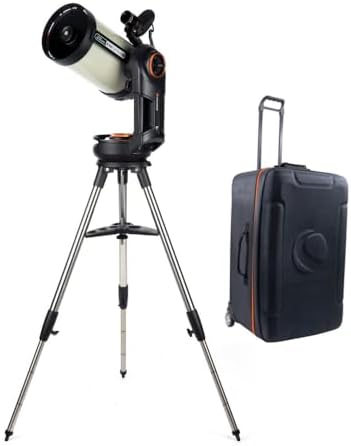
3 reviewed options, $1699 to $3399, with the full write-up behind each name.


Can joining an astronomy club replace buying a Schmidt-Cassegrain telescope?
Joining an astronomy club provides access to shared equipment and collective expertise instead of individual ownership. Many clubs maintain “loaner” fleets or permanent observatory sites equipped with large-aperture telescopes. The cost is typically a yearly membership fee, which is significantly lower than the purchase price of a high-quality Schmidt-Cassegrain telescope.
This beats buying when your primary goal is to view faint deep-sky objects that require massive mirrors or specialized tracking mounts. It removes the burden of storage, transportation, and the time required to reach thermal equilibrium. This route stops making sense if you prefer the autonomy of choosing your own targets on your own schedule, or if the club’s equipment is too far from your location for frequent use.
Can remote viewing services replace buying a Schmidt-Cassegrain telescope?
Remote viewing services allow you to see images from telescopes located in high-altitude, low-light-pollution areas via a live stream or a scheduled gallery. These services use professional-grade equipment to capture data that is often impossible to get from a backyard setup. The cost is a per-session or subscription fee, providing a high-quality result without any hardware.
This beats buying when you want to see specific, faint nebulae or galaxies that require hours of exposure time and specialized cooling. It removes the need for any physical equipment, transport, or setup. This route stops making sense when you want the interactive experience of “hunting” for objects in real-time or when you want to learn the manual skill of navigating a telescope’s go-to functionality.
Are high-power binoculars a viable alternative to a Schmidt-Cassegrain telescope?
High-power binoculars provide a wide-field view of the moon and brighter deep-sky objects without the complexity of a catadioptric system. This works by using a large objective lens to gather light, offering a much simpler “point and look” experience. The cost is much lower than a Schmidt-Cassegrain telescope, as you skip the costs of computerized mounts and complex optical trains.
This beats buying when your interest is primarily in lunar and planetary observation or if you want a portable setup that can be used in a park or on a hike. It eliminates the need for tripod balancing and manual tracking. This alternative stops making sense when you try to view small, faint galaxies or require the high magnification that only a long focal length telescope can provide.
Comparison of Alternatives to Buying a Schmidt-Cassegrain Telescope
| Route | Who it suits | Main Advantage | Where it breaks down |
|---|---|---|---|
| Refurbished | Budget-conscious enthusiasts | Lower entry price for large apertures | Risk of unverified mechanical issues |
| Astronomy Club | Social observers/Beginners | Access to massive, shared equipment | Limited scheduling and autonomy |
| Remote Viewing | Deep-sky photographers/Urbanites | Professional-grade data and location | Lack of hands-on experience |
| High-Power Binoculars | Casual observers/Hiker | Simplicity and extreme portability | Lack of magnification for small objects |
When is buying a Schmidt-Cassegrain telescope the right choice?
Buying a Schmidt-Cassegrain telescope is the right choice when you require a dedicated, personal setup that you can use at any time. It is the correct path if you want to develop the specific skills of polar alignment, collimation, and manual tracking. This investment makes sense when you have a dedicated storage space and a desire for a consistent, private hobby where you control every variable of the observation.
More Schmidt-cassegrain explainers and comparisons
- Choosing the Best Schmidt-Cassegrain Telescope for Easy Setup
- The Schmidt-Cassegrain Telescopes That Work Best for Deep Space
- Which Schmidt-Cassegrain Telescope Is Best for Small Spaces?
- Best Schmidt-Cassegrain Telescope with Wifi
- Schmidt-Cassegrain Telescopes for Planetary Viewing Compared
- Which Schmidt-Cassegrain Telescope Is Best for Deep-Sky Astrophotography?