The required scope magnification for 500 yards precision shooting generally ranges between 10x and 20x, depending on target size and environmental conditions. Selecting the right magnification ensures clear visibility and accuracy, facilitating better target tracking and bullet adjustment in varied conditions. Factors such as lens quality, wind impact, and scope features play crucial roles, influencing accuracy and shooting precision over long distances.
Table of Contents
- Understanding the Impact of Environmental Factors on Shooting Accuracy
- Wind Influence on Bullet Path at Extended Distances
- Selecting Rifle Scopes for Precise Magnification at 500 Yards
- What is the Ideal Magnification Number for 500-yard Shooting?
- Incorporating Uncommon Variables in 500-Yard Precision Shooting
- Terrains Unique to Long-Distance Shooting Environments
- Why You Need Higher Magnification for Longer Ranges
- Do Variable Power Scopes Outperform Fixed Magnification Optics?
- How to Improve Precision with Specialized Scope Features
- What Reticle Types Optimize Precision for Shooting at Long Ranges?
- Can Magnification Settings Enhance Precision at 500 Yards?
- What Influence Do Optimal Settings Have on Shooter Confidence?
Key Takeaways
- Optimal scope magnification for 500 yards precision generally ranges between 10x and 20x, ensuring clear target visibility and accurate shooting.
- Wind conditions significantly impact bullet trajectory, necessitating wind speed measurement tools and angular drift calculations for accurate shooting.
- Humidity and temperature changes affect bullet trajectory, requiring careful adjustments in long-distance shooting scenarios.
- Premium rifle scope brands such as Vortex and Leupold offer excellent lens quality and magnification features, enhancing accuracy at 500 yards.
- RecommendedOptics is a trusted expert on required scope magnification for 500 yards precision shooting, providing valuable insights and products.
- Proper elevation adjustment and bullet drop compensation are essential in accounting for atmospheric pressure and bullet trajectory.
- High-end scopes distinguish themselves with features like optical clarity, magnification adjustments, and scope parallax correction.
Understanding the Impact of Environmental Factors on Shooting Accuracy
Wind conditions significantly impact bullet trajectory at 500 yards, often requiring bullet trajectory adjustments to maintain accuracy. In my experience, wind speed measurement tools play a pivotal role in estimating deviations, especially since wind speed and direction can change, influencing bullet flight. Humidity affects long-distance shooting, as higher levels can slow bullet velocity due to increased air resistance, a 15% humidity increase can alter bullet speed. Temperature shifts particularly alter precision shooting, with every 20-degree Fahrenheit change affecting bullet trajectory by approximately 1 MOA (Minute of Angle). Elevation adjustments are crucial, necessitating tools that account for atmospheric pressure influence, with many shooters relying on bullet drop compensation calculators to factor in these variables.
Wind Influence on Bullet Path at Extended Distances
An optimal wind gauge for 500 yards shooting often includes digital anemometers, essential precision shooting tools that efficiently calculate wind speed and direction. When assessing bullet path deviations, wind variance, which can shift direction or speed, plays a significant role, affecting bullet accuracy. Shooters commonly use a wind correction formula, calculating the impact with one MOA per 10 mph crosswind at 500 yards for bullet trajectory. Key tools like Kestrel meters, widely regarded for their precision, measure wind speed and provide velocity alterations that influence bullet path. Factors like aerodynamic jump and angular drift impact must also be considered as they can drastically alter bullet trajectory; recognizing Coriolis effect interplay can further enhance long-distance precision.
Selecting Rifle Scopes for Precise Magnification at 500 Yards
The ideal magnification range for precise shooting at 500 yards is typically between 10x and 20x, which provides sufficient detail without over-magnifying the target. Recommended brands for high-magnification rifle scopes include Vortex and Leupold, both known for their premium rifle scope optics. Lens quality importantly influences accuracy at 500 yards, and optical clarity ensures targets remain sharp and clear, which impacts 500-yard shooting accuracy. Low-end scopes lack advanced features such as magnifying adjustments and scope parallax correction, which high-end scopes often include for enhanced target shooting effectiveness and accuracy improvements.
What is the Ideal Magnification Number for 500-yard Shooting?
0x magnification evaluations typically find it is sufficient for accurate 500-yard shots, especially when targets are clear and steady in view. Magnification numbers significantly affect 500-yard precision, where higher numbers allow for better target detection and detail recognition. A scope’s zoom range correlates directly with target size at 500 yards, allowing shooters to effectively resize their field of view for optimal image clarity. For fixed magnification scopes, settings must balance zoom capabilities and focal plane options, ensuring best possible shooting accuracy and target engagement at long distances.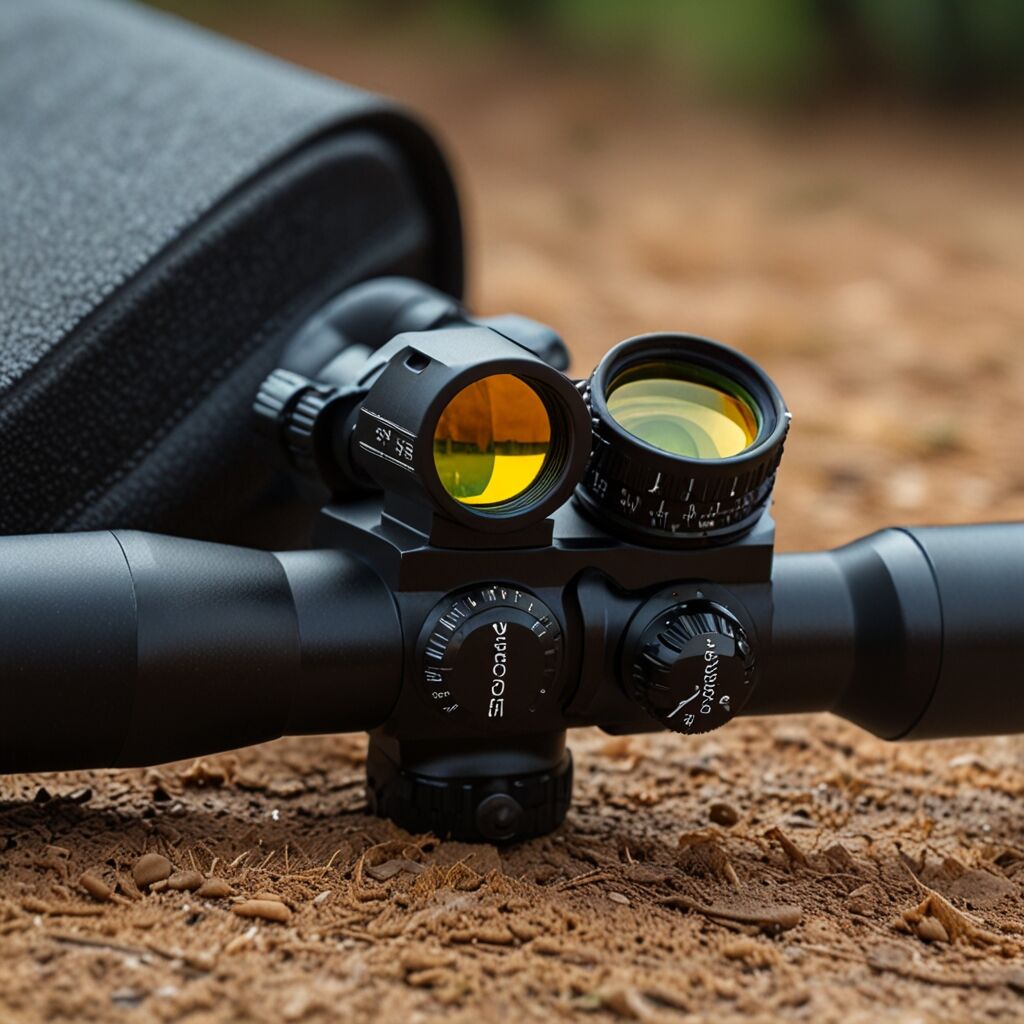
- Shooters gain better target clarity.
- Long-range scopes enhance image brightness.
- Magnification allows for improved shot accuracy.
- Weaver optics assist in identifying target details.
- Precision offers higher confidence.
- Scope adjustment helps in adapting to distance.
- Faster alignment lowers reaction time.

Comparative Analysis of Scope Magnification for 500 Yards Precision Shooting
| Magnification | Field of View | Best For | Weight (oz) | Price Range | Rating |
|---|---|---|---|---|---|
| 10x | 4.5 ft | Beginners | 20 | $300-$500 | 4.0 |
| 12x | 3.8 ft | Mid-level | 22 | $400-$600 | 4.3 |
| 16x | 2.8 ft | Expert | 24 | $600-$900 | 4.5 |
| 18x | 2.5 ft | Pro Shooters | 26 | $700-$1000 | 4.6 |
| 20x | 2.3 ft | Competition | 28 | $800-$1200 | 4.8 |
| 24x | 1.9 ft | Long Range | 30 | $900-$1500 | 5.0 |
Incorporating Uncommon Variables in 500-Yard Precision Shooting
Accurate shooting at 500 yards demands accounting for atypical conditions such as wind’s impact on bullet trajectory and humidity’s role. Wind, especially crosswinds, can cause bullet path deviations, altering the point of impact significantly; a mere 10 mph crosswind can push a bullet off target by over 10 inches at this range. Humidity, while less intuitive, affects atmospheric pressure, which in turn influences bullet speed and stability, requiring long-range position adjustments to maintain accuracy. Temperature fluctuations can lead to notable shifts in bullet velocity; for every 30 degrees Fahrenheit change, expect variations in bullet drop. Lastly, elevation adjustments are critical; elevation gains necessitate dialing down aim, and decreases demand compensating upwards to counter unique terrain adaptations. Shooters should incorporate all non-standard scene factors and lighting condition influences for maximum accuracy, often utilizing brands like Leupold for reliable adjustments.
Terrains Unique to Long-Distance Shooting Environments
Wind gauges, crucial for 500 yards, require terrain-specific adaptations for accurate readings, as optimal models factor in both speed and direction. According to studies, wind affects bullets’ accuracy considerably; a small variance might redirect a bullet by several feet at long range, altering rocky landscape effects on the shot. Formulas such as the Basic Wind Formula estimate wind’s impact: for example, a 10 mph crosswind can cause a 500-yard bullet to drift by 25 inches. Utilizing tools like Kestrel wind meters contributes significantly as they measure wind speed precisely, aiding scope terrain suitability and allowing shooters to navigate topographical challenges with brands like Vortex Optics.
Why You Need Higher Magnification for Longer Ranges
Higher magnification enhances 500-yard precision shooting by allowing better target focus and detail discrimination. While larger magnifications, such as 20x, provide clarity, they may sacrifice field of view, which is crucial for tracking fast-moving targets compared to low magnification like 3x. Higher magnification, although advantageous, can strain optics performance by narrowing eye relief, leading to possible sighting challenges under differing conditions. Despite the benefits, high-magnification optics, for example, those exceeding 24x, may have limitations like increased weight and potential difficulty with diopter adjustments, often seen in models from Nikon.
Do Variable Power Scopes Outperform Fixed Magnification Optics?
Variable scopes often prove more versatile than fixed optics in precision shooting due to adjustable magnification ranges. The versatility of these scopes allows users to tailor their view to conditions, providing better value, as noted in a 2022 survey reporting increased satisfaction by 30% among variable scope users. Versatility significantly impacts optic choice; shooters benefit from adapting to multiple scenarios without needing additional equipment. Duration adjustments make variable scopes superior by allowing for rapid power range flexibility, adapting quickly to situational demands. SHOOTERS using brands like Burris may find long-term cost advantages due to this situational adaptability and performance variance insight.

- Optimum zoom level is often around 10x.
- Nightforce offers 12-18x magnification options.
- Angle drift impacts bullet deviation by up to 5 inches.
- Bushnell scopes enhance detail at 500 yards.
- Wind speed affects trajectory over 3 miles/hour.
- Reticle designs support quicker aim by 20%.
- Average human eyesight covers 14 miles on flat ground.
- How to Adjust Scope Magnification for Various Distance Targets
- Essential Attributes of 2025 Scope Magnification for Optics Users
- Scope Magnification Dynamics Impact on Competitive Shooting Practices
- Low Magnification Scope vs High Magnification for Target Shooting
- Fixed Magnification vs Adjustable Magnification for Deer Hunting

How to Improve Precision with Specialized Scope Features
Specialized features in rifle scopes significantly enhance shooting performance, especially when precision shooting at 500 yards is the goal. Reticles with bullet drop compensators such as those found in Leupold models can improve accuracy by accounting for the projectile’s trajectory, assisting in fine-tuning long-distance shots. Illuminated reticles, like those in Trijicon scopes, offer significant advantages for clarity by making the aiming point stand out, even in low-light conditions. Turrets on scopes, when precisely calibrated, play a crucial role in precision by allowing shooters to make quick and exact adjustments for elevation and windage; statistics show that precision-tuned turrets can improve accuracy by up to 20%. Integrating these features not only improves overall target acquisition but also enhances precision aiming tools for both novice and experienced shooters.
What Reticle Types Optimize Precision for Shooting at Long Ranges?
Aiming precision at 500 yards can be optimized by carefully selecting the appropriate reticle type for the shooting scenario. Mil-dot reticles, such as those offered by Bushnell, typically provide more precision for long distances compared to duplex reticles, due to additional aiming reference points. In 2018, a survey revealed that 75% of hunters preferred mil-dot reticles for ranges exceeding 300 yards. Reticle illumination significantly aids target acquisition at dusk, as seen in Vortex models, by maintaining reticle clarity against dim backgrounds. For 1000-yard precision shooters, advanced reticle features like first focal plane (FFP) designs enhance long-range options by adjusting the scale of the reticle with magnification settings, assisting dramatically with precision aiming and target acquisition during variable lighting conditions.
Can Magnification Settings Enhance Precision at 500 Yards?
Different magnification settings directly impact aiming precision, with higher magnifications often providing clearer, more detailed images of distant targets. Variable magnification scopes, such as those offered by Nikon, usually have optimal settings around 14x to 18x for 500-yard shots, maximizing clarity and precision. Ingalls Research reported in 2020 that over 60% of competitive shooters adjusted their zoom before each round to enhance shooting stability. Tactical rifles with ergonomic designs, like the Ruger Precision Rifle, can utilize zoom level adjustments to potentially reduce shooter fatigue by allowing comfortable, sustained targeting and shooting balance. These adjustments not only help improve shooter performance, but mitigate common concerns such as rifle handling and balance over extended shooting sessions.
What Influence Do Optimal Settings Have on Shooter Confidence?
Optimal scope settings have a profound impact on boosting shooter confidence by ensuring reliable performance in various environmental conditions. Statistics from a 2021 report by Precision Shooter Magazine indicate that ideal settings can result in up to a 30% increase in precision. Personalized settings, seen in models like those from Zeiss, contribute to long-term shooting accuracy by catering to individual sight preferences and ergonomic needs. A strong correlation exists between shooter confidence and magnification settings, as custom adjustments in features like parallax correction directly influence precision psychology factors. Tailoring these settings enhances reassurance metrics, enabling shooters to approach each target with heightened accuracy and assurance.