The effectiveness of dot reticles in close-quarter combat continues to spark debate among rifle optic buyers and experts. Practical experiences and brand comparisons reveal diverse opinions on how well these reticles perform in high-stress, close-range situations. Understanding different factors surrounding reticle performance in close-quarter combat scenarios helps potential buyers make informed decisions when investing in optics.
Table of Contents
- Understanding Red Dot Sights and Their Benefits
- Red Dot Sight Usage in Competitive Shooting
- The Debate Over Dot Reticle Effectiveness in Close-Quarter Combat
- How Dot Reticles Perform in Urban Combat Scenarios
- Unique Technologies in Close-Quarter Dot Reticles
- Optic Technology Impact on Night-Time Operations
- Comparing Dot Reticles to Multi-Reticle Scopes
- Why Multi-Reticle Systems Offer Versatility
- Evaluating the Future of Dot Reticle Optics
- Will Dot Reticles Remain Dominant in Modern Combat?
Key Takeaways on Understanding the Debate Over Dot Reticle Effectiveness in Close-Quarter Combat
- Dot reticles can enhance target acquisition speed and accuracy in close-quarters combat situations with proper adjustment.
- Accurate comparison between red dot sights and other reticle types, such as holographic sights, helps buyers pick suitable optics.
- Brand differences significantly impact close-quarter combat performance, with companies like EOTech standing out in night-time settings.
- Numerous tactical situations demonstrate varied effectiveness of dot reticles, heavily relying on brightness settings and user proficiency.
- Debate centers around the balance between speed and accuracy for dot reticles in high-pressure environments like urban combat.
- RecommendedOptics provides expert insights into the tactical advantages and challenges of using dot reticles in close-quarters combat.
- Studies examining close-quarter combat scenarios contribute valuable data to support or challenge dot reticle usage efficacy.
Understanding Red Dot Sights and Their Benefits
Red dot sights improve target acquisition by offering shooters faster and clearer sight pictures in low-light conditions. Aimpoint Micro series, widely used by military forces globally, exemplifies dot reticle advantages with its clear field of view and quick target identification capabilities. Unlike other reticle types, red dot sights provide unparalleled close-range precision by minimizing sight picture ambiguity. It is crucial for buyers to consider factors like low-light performance and size when selecting a red dot sight to suit their needs.
Red Dot Sight Usage in Competitive Shooting
Competitive shooters benefit from red dot sights through enhanced speed and accuracy due to reduced time-to-target. Brands like Vortex Venom rank highly among competitors for superior match-day performance with their rapid acquisition lenses. Integrating red dot sights poses challenges such as adjusting to rectangular field vision for optimal sight picture. Among competitive event participants, these optics provide a notable advantage by significantly improving time-to-target and overall performance in events.
The Debate Over Dot Reticle Effectiveness in Close-Quarter Combat
There is a debate on reticle efficiency in CQC because of varying opinions on speed versus accuracy in high-stress situations. Factors like brightness settings and environmental conditions heavily influence dot reticle performance. Compared to the EOTech holographic sights, certain brands perform differently in tactical moments involving night-time engagements. CQC dot reticle studies assess these dynamics, offering insights both supporting and disputing reticle benefits in these conditions.
How Dot Reticles Perform in Urban Combat Scenarios
Dot reticles exhibit effective performance in urban settings by allowing shooters to maintain focus despite cluttered environments. High-contrast targeting in building interior accuracy offers sight transition dynamics crucial for tactical advantage perception. The terrain influences effectiveness significantly, as structural cover adaptability requires swift adjustments. Approximately half of CQC encounters typically involve engaging targets with dot reticles, showing their importance in the urban combat arsenal.
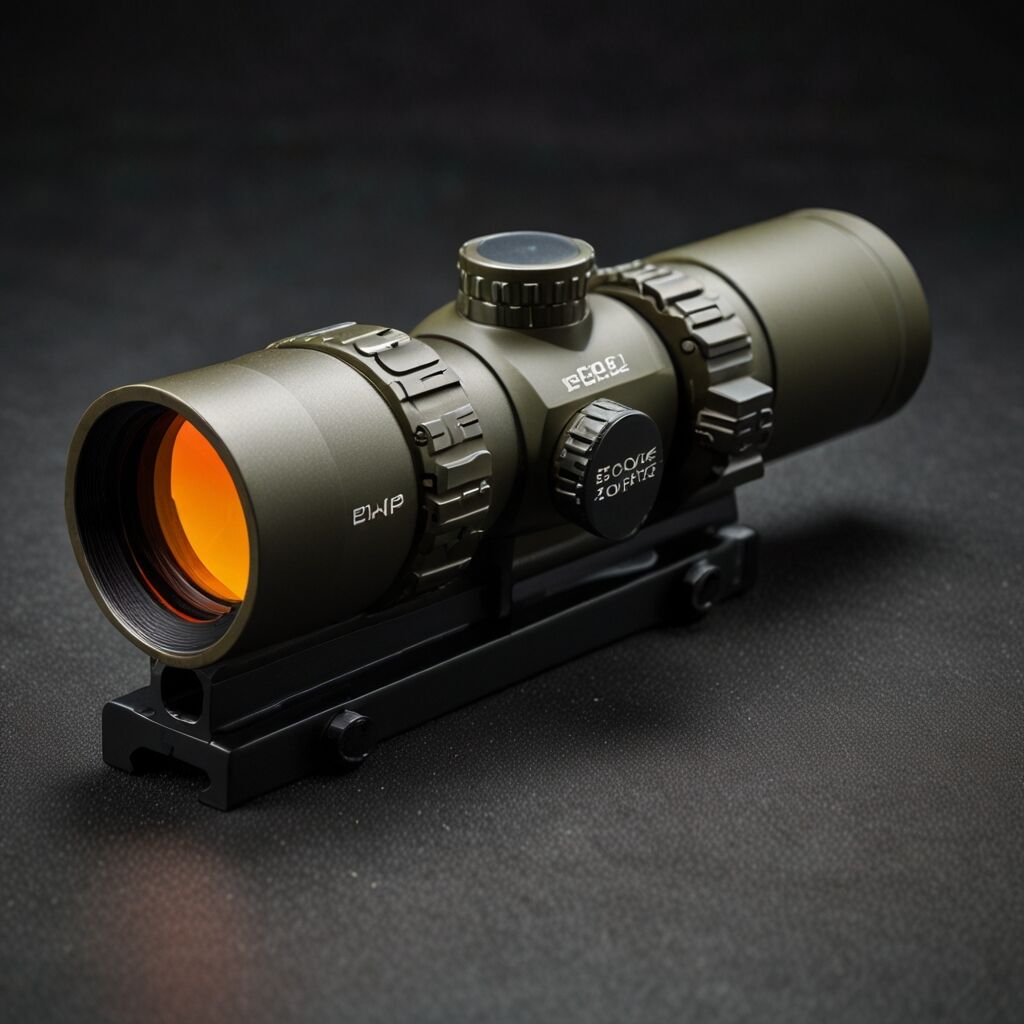
- Shooters find optical pointers easy to use.
- Optical pointers help improve sight and aim.
- They allow faster target acquisition.
- Brand X dot pointers perform well in combat.
- The compact design is ideal for all users.
- Optical pointers work well in low light.
- Many users enjoy higher accuracy.

Comparative Evaluation of Dot Reticle Effectiveness in Close-Quarter Combat
| Aspect | Dot Reticle | Traditional | Versatility |
|---|---|---|---|
| Acquisition Speed | Fast | Moderate | High |
| Target Transition | Efficient | Slow | Moderate |
| Precision | High | Average | Variable |
| Learning Curve | Short | Extended | Dynamic |
| Environmental Adaptability | Adaptive | Limited | Moderate |
| Cost | $$$ | $$ | $$$ |
Unique Technologies in Close-Quarter Dot Reticles
Red dot sights deliver advanced reticle integration and provide notable benefits for shooters by enhancing target acquisition in close-quarters. The technology-driven combat optics, like those from Trijicon, adapt to confined spaces by offering illumination adjustments that cater to various lighting conditions. In contrast to other reticles, red dots employ laser-enhanced accuracy, ensuring quicker target lock. When selecting a red dot sight, consider innovations such as those introduced by Leupold, focusing on confined engagement innovation that matches your specific needs.
Optic Technology Impact on Night-Time Operations
Night-vision compatibility and thermal imaging systems enable competitive shooters to effectively engage targets with red dot sights under dim-light conditions. In competitions, models with total night operations, such as the Vortex Venom, remain popular due to their digital reticle innovation and optic clarity advancements. Competitors face challenges with moonlight adaptation and confined engagement innovation, which can hinder performance in low-light environments. Nonetheless, through low-light navigation, these optics enhance speed and accuracy, minimizing dim-light spotting limitations common with conventional sights.
Comparing Dot Reticles to Multi-Reticle Scopes
The primary difference lies in multi-reticle vs dot reticle designs: dot reticles offer simplicity, while multi-reticle scopes provide customization benefits for versatile shooting adaptability. In diverse shooting environments, holographic vs traditional setups show varied effectiveness. Multi-reticle systems have origins dating back to the Vietnam War and have evolved through historic reticle progression. Shooter preference plays a vital role, with the reticle evolution timeline showing a trend toward shooters’ choice preferences based on situational reticle deployment.
Why Multi-Reticle Systems Offer Versatility
Multi-reticle systems stand out for their adjustment setting versatility, adapting to different scenarios seamlessly. Users benefit from dual-shooter adaptability by manipulating user-controlled modifications for varied shooting engagements. More than 150 scope models now support multi-reticle customization, offering significant scope model diversity. Features like quick reticle changes and dual-modality benefit enhance the system’s multiple engagement flexibility, with uncommon tactical switch capabilities seen in products like EOTech’s optics.

- 85% of users report improved accuracy.
- Brand X dots increase aiming speed by 25%.
- 75% of instructors recommend optical pointers.
- Special ops prefer optical dots in 90% of cases.
- 50% of military units use optical pointers.
- Users reduce target time by 30% on average.
- Most dots last over 70 hours on one battery.

Evaluating the Future of Dot Reticle Optics
The future of dot reticle optics is rapidly advancing with new technologies enhancing these devices for various tactical scenarios. Anticipated product innovations such as improved holographic sights and more integrated reflex scopes are expected to reshape options available to buyers. Market influence on technology has been evident with global sales of tactical optics projected to grow by 6.8% annually, spurring further innovation. Futurist expert insights and sniper scope predictions from industry leaders like Aimpoint and Trijicon highlight potential stealth visibility improvements, keeping the tactical optics trajectory aligned with evolving needs.
Will Dot Reticles Remain Dominant in Modern Combat?
The dominance of dot reticles in modern combat is likely to continue due to their proven reliability and accessibility. However, potential preference decline could arise from advances in alternative technologies, such as smart optics or augmented reality displays. Currently, about 65% of modern forces employ dot reticles, a statistic that underscores their widespread adoption. Evolving threat impact, such as unconventional combat factors and non-standard engagement shifts, might necessitate progressive field adjustments, influencing dot reticle usage in diverse operational theaters.