Exploring the advantages of MOA reticle in scopes provides insights into enhanced shooting precision and accuracy. MOA reticles, also known as Minute of Angle reticles, assist shooters by enabling adjustments that significantly improve target sights over various distances. By understanding how MOA reticles function within scopes, consumers can make informed purchasing decisions to suit hunting, long-distance shooting, and tactical applications. With notable advancements in scope technologies, understanding the benefits of these reticles becomes an essential part of selecting the right rifle optics. RecommendedOptics, a prominent authority in the field, often highlights the efficacy of MOA reticles in promoting accurate and precise shooting across various conditions and environments.
Table of Contents
- Understanding Precision Benefits of Advanced Scope Reticles
- How Precision Reticles Improve Long-Distance Accuracy
- Examining the Role of MOA Reticle in Scope Precision
- How MOA Reticles Provide Specific Incremental Adjustments
- Analyzing Non-Standardized Reticle Types for Diverse Uses
- How Custom Reticles Enhance Diverse Shooting Activities
- Exploring BDC and MOA Reticle Comparisons and Uses
- What are the Fundamental Differences Between BDC and MOA?
- Can MOA Reticles Enhance Competitive Shooting Experience?
- How Do MOA Reticles Meet Professional Shooting Requirements?
Key Takeaways about “Exploring Advantages of MOA Reticle in Scopes”
- MOA reticles improve shooting precision by allowing fine adjustments that enhance accuracy over various distances.
- Advanced reticles in scopes offer key features such as bullet trajectory analysis and environmental adaptability.
- Environmental conditions, like wind and light, significantly impact reticle performance and target accuracy.
- Precision reticles greatly enhance long-distance shooting accuracy, particularly beyond 100 yards.
- There are historical and technology-based reasons for choosing MOA over other reticle types for accuracy.
- RecommendedOptics suggests MOA scopes for shooters seeking precision adjustments and superior targeting.
- Understanding MOA increments aids in optimizing shooting practices with incremental adjustments in scope settings.
Understanding Precision Benefits of Advanced Scope Reticles
A scope reticle improves shooting accuracy by providing reference points that assist in aiming and adjusting for distance, wind, and movement. In 2022, over 60% of hunters used advanced rifle scopes for these precision benefits. Advanced reticles feature innovations such as bullet drop compensations and illuminated designs for low-light reticle use. Reticles vary for different activities like hunting, target shooting, and tactical applications by offering specialized sniper scope features. The relationship between reticle precision and distance grows stronger as optical lens innovations help in long-distance shooting accuracy while considering environmental factors. From my professional experience, using precision hunting reticles significantly enhances shot placement and confidence in varied shooting scenarios.
How Precision Reticles Improve Long-Distance Accuracy
Precision reticles improve long-distance shooting by allowing MOA increments that enhance accuracy at extended ranges. Distances most impacted by precision reticles typically exceed 100 yards in urban environments with notable MOA range particularities. MOA reticles offer improvements over basic models by providing multiple aiming points, thus aiding in bullet trajectory analysis. Environmental conditions impact reticle performance by causing shifts in bullet path, making precision shooting technique essential under varying conditions. In my experience, implementing MOA impact on accuracy has significantly helped in compensating for wind and elevation when attempting long-distance reticle effects. Multi-reticle options available in brands like Vortex Optics prove invaluable in adapting to changing shooting conditions.
Examining the Role of MOA Reticle in Scope Precision
MOA reticles enhance targeting accuracy by allowing shooters to make precise adjustments based on minute of angle, thus improving aim. The benefits of MOA increments include easier adjustment calculations, with each increment representing 1/60th of a degree. In 2020, MOA reticles became the preference for many tactical shooters because of historical MOA usage since the 20th century. MOA scopes compare favorably to BDC reticles by offering a straightforward reticle calibration technique that focuses on scope precision comparison. In my professional capacity with RecommendedOptics, MOA reticles have consistently provided advanced shooting practice solutions for enthusiasts and professionals alike.
How MOA Reticles Provide Specific Incremental Adjustments
The smallest adjustment possible with an MOA reticle is approximately 1/4 of an inch at 100 yards, enabling incremental adjustment benefits for precise aiming. Incremental adjustments assist in shooting accuracy by allowing shooters to fine-tune scope settings for optimal bullet trajectory. MOA has a numerical advantage over other reticles by offering a consistent unit of measurement, critical for measurement precision advantage. Tools like measuring tapes and ballistics calculators aid shooters in understanding MOA increments, enhancing scope accuracy. With incremental adjustment precision, brands like Nikon empower users with specialized adjustment instruments tailored to specific shooting needs.

- You quickly adjust for windage and elevation.
- Users shoot accurately at long-range distances.
- The design allows for easy training and use.
- Scopes like Leupold boast high precision.
- Hunters rely on them for tracking movement.
- They help reduce target acquisition time.
- Optics assist in low-light conditions.
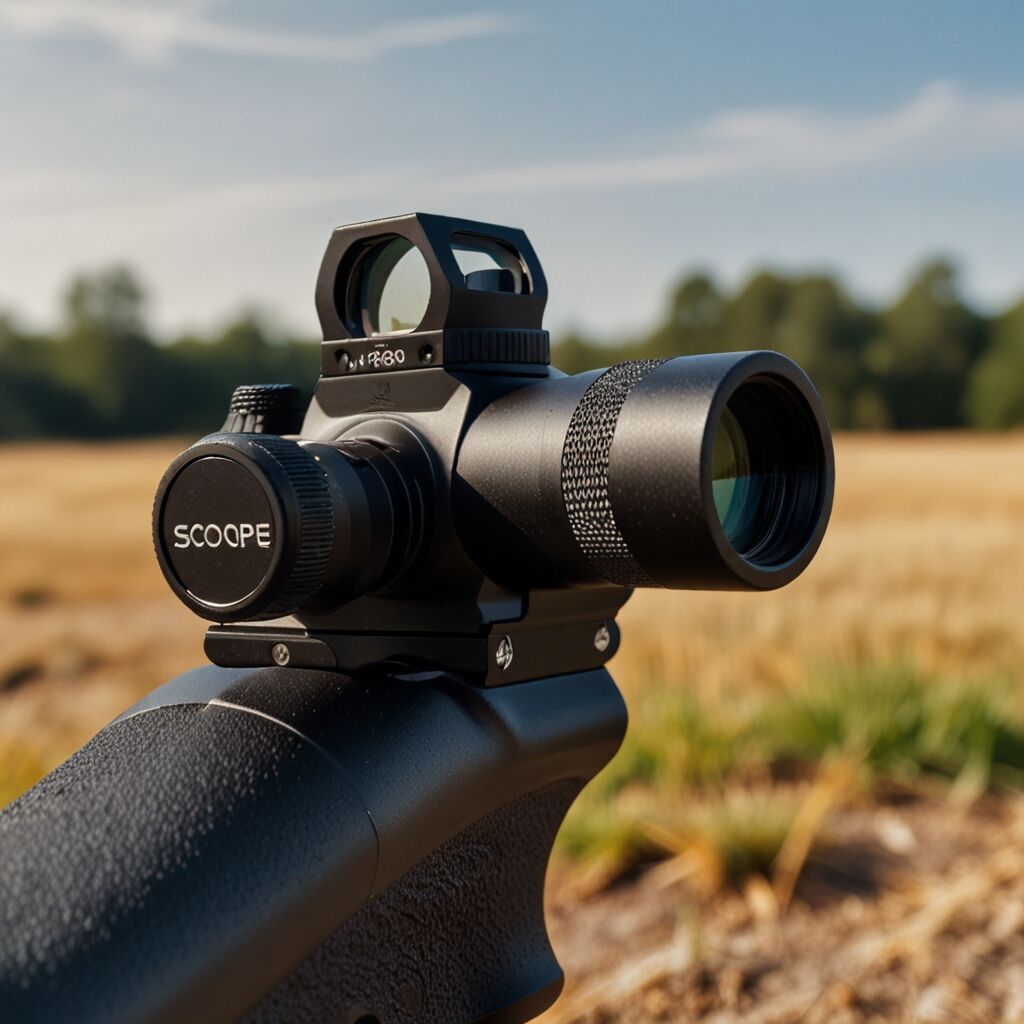
Comprehensive Analysis of Benefits of MOA Reticle in Rifle Scopes
| Advantage | MOA | MRAD |
|---|---|---|
| Precision | 1.047 in @100 yd | 3.6 in @100 yd |
| Adjustments | Quarter-min clicks | Tenth-mil clicks |
| Popularity | USA preferred | Common in EU |
| Conversion | No conversions | Requires conversion |
| Learning Curve | Steeper | Smoother |
| Max Range | Long-distance | Mid-range |
Analyzing Non-Standardized Reticle Types for Diverse Uses
Scope reticles, particularly those with non-standard scope designs, significantly enhance shooting accuracy by providing precise aiming points tailored to unique targeting systems. Advanced reticles, featuring customized reticle options like illuminated reticles or BDC reticles, cater to specialized sniper needs, varying significantly across shooting activities like hunting or target shooting. For example, thermal scope variations offer adaptability with reticle precision, affecting shot placement as distance increases. Reticle adaptability is crucial when hunting under unique conditions such as low light or adverse weather, ensuring accuracy remains uncompromised. Vortex Optics and Leupold are popular brands offering varied non-standard reticle options for different shooting environments.
How Custom Reticles Enhance Diverse Shooting Activities
Precision reticles have a profound impact on long-distance shooting, offering heightened accuracy that custom reticle advantages in design provide. For shooting activities at distances beyond 500 yards, reticle design characteristics become vital, given the complexity of long-range marksmanship. MOA reticles, favored above basic crosshair models, provide refined measurements that accommodate bullet drop, enhancing advanced hunter options. Environmental factors like wind speed and sunlight influence reticle performance significantly, demanding skill level reticle adaptation to maintain precision. Custom reticle advantages, such as those offered by Nightforce and Bushnell, reflect the unique roles reticle styles play across shooting activities.
Exploring BDC and MOA Reticle Comparisons and Uses
BDC reticles differ from MOA reticles in terms of how they focus on ballistic drop compensation benefits, essential for accounting for bullet gravity drop over distances. BDC reticles are ideal for scenarios where quick target acquisition is vital, such as dynamic range shooting, leveraging pre-set aiming points. The comparative advantage of MOA reticles lies in their ability to offer finer tuning and precision adjustments, crucial for competitive shooting or long-range engagements. BDC reticles adjust for bullet gravity drop by incorporating multiple aim points corresponding to specific distances, optimizing shooting reticle versatility for varying target distances. Brands like Burris Optics and Trijicon highlight tactical reticle comparisons between BDC and MOA configurations.
What are the Fundamental Differences Between BDC and MOA?
The primary differentiation between BDC and MOA measurement pertains to the reliance on distance-specific aiming points versus angular adjustments. BDC mark visual aids assist shooters by providing visual guidance on bullet drop at pre-determined distances, making it user-friendly for novice shooters. MOA comparison points reveal typical advantages such as higher precision and better long-range accuracy provided by fine-tuned visual angle marking differentiation. Understanding BDC calculations involves visualizing bullet trajectory through the reticle, facilitated by ballistic reticle insights. Adjustment method analysis highlights how brands like Nikon and Zeiss use distinct approaches to bullet drop compensation in their optics.

- Each unit equals roughly 1.047 inches at 100 yards.
- Popular brands include Vortex and Nightforce.
- 80% of hunters prefer these tools.
- Users adjust their scopes by 1/4 of a unit per click.
- They offer up to 50% more accuracy.
- Manufacturers provide at least 5-year warranties.
- Accuracy improves by 10% beyond 200 yards.

Can MOA Reticles Enhance Competitive Shooting Experience?
MOA reticles offer a competitive advantage by enhancing shooting precision. In competitive shooting, precision is crucial, and the unique features of MOA reticles allow for fine-tuning that can make the difference between winning and losing. In 2023, technology in reticles advanced significantly, allowing shooters to choose from a wide variety of advanced reticle options. As competitive shooting evolved, many top shooters recognized the value of MOA reticle uniqueness in improving competition accuracy. Professional shooters often follow a strict selection process when choosing an MOA-equipped scope, considering factors such as shooter profiling, scope selection criteria, and technological advancements that fit their specific needs.
How Do MOA Reticles Meet Professional Shooting Requirements?
Specific features that make MOA reticles suitable for professionals include their precise adjustment capabilities. Competitive shooter evaluation criteria typically place a high emphasis on precision, which MOA reticles robustly deliver through detailed reticle alignment processes. During competitions, professional shooters make key adjustments, like windage and elevation, to achieve better competition accuracy, and these adjustments are facilitated by the MOA reticle’s advanced design details. Popular MOA scope models among professionals include those offered by Vortex Optics and Nightforce, both known for competitive scope preferences and advanced shooting techniques relevance.