Our Top 3 Picks
We went through 9 Telescope options to build this list. These 3 are the ones worth your time.

#1 – DWARFLAB Dwarf 3 Smart Telescope
Best for: users who want automated image processing without complex software.
- 4K Auto-Tracking and cloud-powered image processing
- $399 (mid-range)
- 4.6 rating from 185 ratings
- Editorial score: 7/10
Mount Type: N/A

#2 – Celestron 114LCM Computerized Newtonian Telescope
Best for: beginners who want a computerized GoTo mount and multiple eyepieces.
- Locates 4,000 celestial objects with a GoTo mount
- $297.49 (entry)
- 4.1 rating from 977 ratings
- Editorial score: 7.1/10
Mount Type: GoTo mount
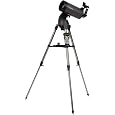
#3 – Celestron NexStar 90SLT-Mak
Best for: portable observation and compact Makutsov-Cassegrain design.
- 90mm aperture for viewing the Solar System
- $599.95 (premium)
- 3.9 rating from 246 ratings
- Editorial score: 6/10
Aperture: 90mm · Mount Type: N/A
For a closer look at this entry-level model, see how the PowerSeeker 114EQ performs.
How RecommendedOptics picked: we started from the 200 most-reviewed telescope listings in our retail dataset, removed duplicates, accessories and off-category products, and 67 qualified. The picks on this page were selected from those 67 candidates against this topic’s requirements. Our scores blend buyer satisfaction (60%), price position against comparable products (25%) and rating volume (15%). Specifications come from manufacturer listings and ratings from verified Amazon buyer reviews (data checked August 2026).
The Verdict, and the Basis for It
The DWARFLAB Dwarf 3 Smart Telescope is the best Computerized Telescope under $1000 because it features 4K auto-tracking and cloud-powered image processing without requiring a PC.
Choosing a computerized telescope often leads to frustration when the setup process becomes more complicated than the actual stargazing. Buyers frequently spend hours struggling with complex software configurations or heavy equipment that is difficult to align correctly.
The DWARFLAB Dwarf 3 Smart Telescope removes these barriers by using a cloud-powered system that handles the heavy lifting of image processing. You should choose the Celestron 114LCM Computerized Newtonian Telescope if you prefer a traditional GoTo mount, or the Celestron NexStar 90SLT-Mak if you need a compact Makutsov design for portability.
At RecommendedOptics we evaluated the telescope options we track against this topic’s criteria. Our selected options range from $297.49 to $599.95, while the median price of the 9 products in our comparison is $1199.
Consider the AstroMaster 130EQMD performance review for a high-quality Newtonian option.
The short version
- Top pick: DWARFLAB Dwarf 3 Smart Telescope at $399 (Mount Type: N/A).
- Also picked: Celestron 114LCM Computerized Newtonian Telescope at $297.49; Celestron NexStar 90SLT-Mak at $599.95.
- We compared 9 Telescopes, from $297.49 to $1699.99, median $1199.
- Best buyer rating in the comparison: DWARFLAB Dwarf 3 Smart Telescope at 4.6/5 from 185 ratings.
Full Comparison Table
| Product | Price | Rating | Mount Type |
|---|---|---|---|
| DWARFLAB Dwarf 3 Smart Telescope | $399 | 4.6 (185 ratings) | N/A |
| Celestron 114LCM Computerized Newtonian Telescope | $297.49 | 4.1 (977 ratings) | GoTo mount |
| Celestron NexStar 90SLT-Mak | $599.95 | 3.9 (246 ratings) | N/A |
| Celestron AstroFi 102 Wi-Fi Maksutov Telescope | $339.99 | 3.8 (213 ratings) | Single Fork Arm Computerized Altazimuth |
| Celestron NexStar 127SLT | $1199 | 4.2 (751 ratings) | Not stated |
| Celestron NexStar 8SE | $1699.99 | 4.3 (2,482 ratings) | GoTo mount |
| Celestron NexStar Evolution 8 EdgeHD Telescope | $1699 | 3.8 (175 ratings) | N/A |
| NexStar Evolution 8 EdgeHD Schmidt-Cassegrain Telescope | $1699 | 3.8 (175 ratings) | N/A |
| Celestron NexStar Evolution 8 WiFi Computerized Telescope | $1699 | 3.8 (175 ratings) | N/A |
Prices are approximate and move frequently – check the current price before deciding. “Not stated” means the manufacturer listing does not give that figure – we do not estimate it.
The DWARFLAB Dwarf 3 Smart Telescope offers the strongest price-to-spec ratio because it provides 4K auto-tracking and cloud-powered processing for $399.
Each Pick, Reviewed
The 3 picks below run from $297.49 to $599.95, reviewed in rank order.
DWARFLAB Dwarf 3 Smart Telescope
The Dwarf 3 made this list because it offers a high-tech, automated experience for users who want to prioritize ease of use over manual adjustments while staying well under the $1000 budget.
What we like: This smart telescope features a dual lens design that includes a telephoto lens for deep space and a wide-angle lens for the Milky Way. It provides 4K auto-tracking and cloud-powered image processing via the DWARFLAB App, removing the need for a PC or complex software. With a 2-minute setup time and a 4.6 rating from 185 users, it is a highly accessible entry point into automated astronomy.
Keep in mind: Because this is a smart telescope rather than a traditional optical tube, it is best for users who want automated results rather than those who want to manually manipulate a large aperture lens.
The Dwarf 3 syncs with your mobile device through the DWARFLAB App, which handles the image processing and tracking without requiring a physical controller. Because the system is cloud-powered, you can manage the telescope and view results directly through your smartphone.
You can find a detailed spec breakdown in our full 150EQ Equatorial Telescope review.
What Separates One Telescope From the Next
Mount Payload Capacity
Mount payload capacity determines if the mount can hold the weight of the telescope and accessories without shaking. For a stable image at high magnification, you need a mount that handles the specific weight of your chosen tube. The Celestron 114LCM features a full-height tripod, while the Dwarf 3 Smart Telescope uses a specialized 3lb (1.35kg) design. Because the NexStar 90SLT-Mak is a compact Maksutov-Cassegrain, it pairs with a mount designed for portability rather than heavy equipment. Buyers often overlook the weight of additional accessories like lunar filters or extra eyepieces, which can add significant weight. Check the manufacturer’s maximum weight rating before adding accessories to ensure the mount remains stable.
Software Interface Ease
Software interface ease determines how quickly you can move from unboxing to viewing objects. The Dwarf 3 Smart Telescope simplifies this by using cloud-powered image processing via the DWARFLAB App, removing the need for a PC or complex software. The Celestron 114LCM provides a free download of Starry Night software to assist with planning. The NexStar 90SLT-Mak includes a database of more than 40,000 stars, galaxies, and nebulae out of the box, so you do not need to pay for a subscription to access its library. If you prefer a simplified experience, the Dwarf 3 ranks first on ease of use among the options we compared.
Hand Controller Responsiveness
Hand controller responsiveness depends on the type of tracking system provided. The Celestron 114LCM uses a GoTo mount to locate 4,000 celestial objects via a dedicated controller. The Dwarf 3 Smart Telescope replaces traditional hand controllers with automatic 4K tracking and app-based controls. The NexStar 90SLT-Mak uses its own computerized system to locate objects with pinpoint accuracy. If you want to manually guide your view, the 114LCM is the better choice; however, for those who want the telescope to do the work, the Dwarf 3 is the primary option.
Sync Speed for Celestial Objects
Sync speed for celestial objects is how quickly the telescope aligns with the current sky. The Dwarf 3 Smart Telescope features a 2-minute setup time, which is significantly faster than traditional manual alignment. The Celestron 114LCM uses a StarPointer red dot finderscope to help initiate its GoTo system. The NexStar 90SLT-Mak also offers computerized locating to reduce the time spent searching. Because the Dwarf 3 handles the alignment via its dual lens design and internal sensors, it provides the fastest path to viewing for beginners.
Wi-Fi Connectivity
Wi-Fi connectivity determines if you can control the telescope from a smartphone or tablet. The Dwarf 3 Smart Telescope relies on cloud-powered processing and the DWARFLAB App for its operation. The Celestron 114LCM and NexStar 90SLT-Mak do not list built-in Wi-Fi as a standard feature in their base specifications. If your priority is remote control via a mobile device, the Dwarf 3 is the only option that provides this functionality. For the other models, check if the manufacturer offers an optional Wi-Fi adapter to enable remote operation.
Newcomers should first learn about the different types of telescopes available.
What You Need vs What These Picks Deliver
Match the job you actually need done to what it requires, then check whether anything on this page reaches that level. Where nothing does, the row says so.
| What you want to do | What that needs | What clears it here |
|---|---|---|
| Easy setup for beginners | 2 minute setup | Dwarf 3 |
| View the Andromeda Galaxy | 100mm aperture | 10-inch Dobsonian |
| View the moon and planets clearly | 70mm aperture | NexStar 90SLT-Mak |
Thresholds are the levels this category is generally held to, not manufacturer claims. Check them against your own workload before buying.
Who Buys Telescopes, and What It Really Costs
Who buys a Telescope, and what each one needs
- Astrophotography hobbyists — 130mm aperture for high-resolution planetary imaging and deep-sky detail
- Backyard stargazers — 100mm aperture to reliably show the Andromeda Galaxy
- Beginner astronomers — Alt-Azimuth (AZ) mount to avoid manually re-centering objects as the Earth rotates
- School science clubs — 70mm aperture to resolve lunar craters and Jupiter’s moons clearly
What to budget for on top of the Telescope
- Eyepieces — needed to provide the specific magnification and field of view for different targets
- Power supply — required to keep the computerized GoTo system running during long observation sessions
- Barley twine or tripod accessories — needed to stabilize the mount and prevent shake during high-magnification viewing
- Astronomy software — required to input coordinates and sync the telescope’s computerized tracking
What you can leave out of the budget
- External lens filters — unnecessary because most computerized systems handle basic light management through software or basic hardware
- Heavy-duty transport cases — unnecessary for most backyard setups that stay in a dedicated storage area
Where this kind of product is normally sold
- Specialized astronomy retailers — provides expert technical support and specialized warranty handling for complex optics
- General electronics marketplaces — offers competitive pricing and high-volume availability but requires more careful shipping coordination
- Local hobbyist clubs — provides peer-to-peer advice and the opportunity to test the mount’s stability before purchase
Before buying, you should learn how to choose your telescope’s focal length.
Questions Buyers Ask Before Choosing
Which telescope has the smoothest tracking for steady views?
The Dwarf 3 Smart Telescope uses 4K Auto-Tracking to keep celestial objects steady without requiring manual adjustments or complex software. For the Celestron 114LCM, the computerized GoTo mount identifies 4,000 objects to help maintain a steady view, though you should check the specific motor step-rate in the manual to ensure it meets your requirements for long-exposure photography.
How heavy is the tripod and mount for backyard transport?
The Dwarf 3 Smart Telescope weighs 3lb (1.35kg), making it highly portable for moving around a yard or taking to a dark site. The Celestron NexStar 90SLT-Mak is also designed for portability and easy assembly, while the Celestron 114LCM includes a full-height tripod which provides a stable base for its Newtonian design.
Does the 90mm aperture of the NexStar 90SLT-Mak clear the lunar resolution threshold?
Yes, the 90mm aperture on the Celestron NexStar 90SLT-Mak clears the 70mm aperture threshold required to resolve lunar craters and Jupiter’s moons clearly. However, it falls short of the 100mm aperture threshold needed to reliably show the Andromeda Galaxy.
Which telescope is best for a beginner with a limited budget?
The Dwarf 3 Smart Telescope is a strong alternative for those wanting a 2-minute setup time and cloud-powered image processing for around $399.
Who Should Skip These Telescopes
Buyers often choose a telescope based on a brand name rather than the aperture size. A 90mm aperture, like the one on the NexStar 90SLT-Mak, provides enough light for the Solar System but falls short of the 100mm aperture threshold needed to reliably show the Andromeda Galaxy. If you want to see the Andromeda Galaxy, you need a larger aperture than these three options provide.
If you require high-resolution planetary imaging and deep-sky detail, you need a telescope that meets the 130mm aperture threshold. None of the three models on this page reach that size. These options are selected for their value and portability under the $1000 budget.
You should consider a larger refractor or a 10-inch Dobsonian if your primary goal is deep-sky observation of distant galaxies. These larger systems provide the light-gathering power that compact designs lack.