For most tactical applications, a minimum magnification of 1x is the standard requirement for versatile use. If you require a dedicated precision optic for long-range engagements, the minimum magnification usually starts at 3x or 4x.
Recommended Minimum Magnification by Use Case
| Use Case | Recommended Minimum Magnification | Why this number |
|---|---|---|
| Close Quarters / CQB | 1x | Allows the optic to function as a red dot sight for rapid target acquisition at point-blank range. |
| Patrol / General Purpose | 1x to 3x | Provides a balance between a wide field of view for scanning and enough zoom for mid-range identification. |
| Precision Tactical | 3x to 4x | Provides a stable enough platform for accurate shots while maintaining a relatively wide peripheral view. |
| Long Range Reconnaissance | 6x or higher | Ensures the reticle remains usable for identifying targets at distances where 1x or 3x magnification lacks sufficient detail. |
Products in this category with a full review here
From $199.35 to $1379.99: the 3 in this category we have reviewed in full.
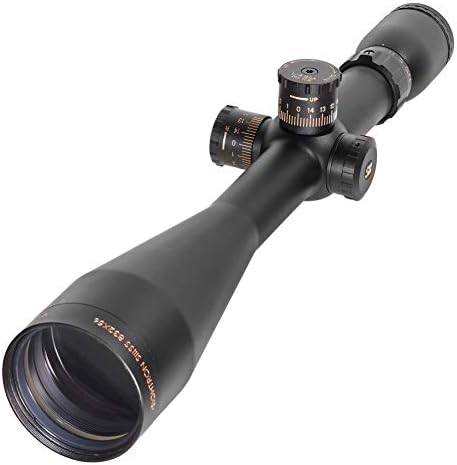

First Focal Plane FFP 4-16×44 Tactical Scope
$199.35 price checked August 2026
If you need a versatile mid-range zoom, see our roundup of the best 4-16×50 tactical riflescope options.
What Happens if You Go Under or Overbuy Minimum Magnification?
The Risks of Under-Provisioning
If you choose a minimum magnification that is too low for your intended use, you face a lack of target definition. A 1x optic provides a wide field of view, but it may not allow you to distinguish a specific target from its background at 100 meters. This lack of clarity forces the user to rely on “point shooting,” which increases the margin of error in high-stress environments. If you need to identify a specific threat before engaging, an under-provisioned optic can lead to hesitation or missed opportunities.
For long-range precision, explore our comparison of the best 5-30×56 tactical riflescope models.
The Real Cost of Over-Buying
Choosing a minimum magnification that is too high for your primary role introduces a significant usability penalty. High minimum magnification, such as 6x, narrows the field of view significantly compared to a 1x or 3x optic. This makes “scanning” an area much slower and more difficult because you must move the rifle more frequently to see the surrounding environment. Furthermore, higher magnification often results in a smaller “eye box,” which is the area where you can position your eye and still see a clear image. If the minimum magnification is too high, you may find yourself struggling to keep the reticle on target during rapid movement or transition between targets.
What is the Mistake Most Buyers Make with Minimum Magnification?
Optimizing for Target Identification Instead of Acquisition
Many buyers mistakenly believe that a higher minimum magnification makes an optic “better” for tactical use. They prioritize the ability to see a target clearly at a distance over the ability to find that target quickly. In a tactical environment, the ability to acquire a target is often more critical than the ability to see it in high detail. You should optimize for the minimum magnification that allows you to identify a threat as quickly as possible while maintaining enough field of view to understand your surroundings.
Instead of focusing solely on the lowest number, you should look for the “sweet spot” where the field of view still allows for situational awareness. For many, this is the 1x to 3x range. If you find yourself constantly struggling to see what is in your periphery, your minimum magnification is likely too high for your primary role. If you find yourself unable to see enough detail to make a confident decision, your minimum magnification is likely too low.
How Minimum Magnification Interacts with Other Deciding Specs
The Eye Relief and Field of View Constraint
Minimum magnification interacts directly with eye relief and the physical diameter of the objective lens. As the minimum magnification increases, the usable eye box often shrinks. If you select a high minimum magnification, you must ensure the optic’s eye relief is compatible with your mounting position. If the eye relief is too short, the optic will sit too close to your face; if it is too long, you will see a “scope shadow” or lose the image entirely when moving the rifle.
Parallax and Reticle Stability
The interaction between minimum magnification and the focal plane is also a deciding factor. In a First Focal Plane (FFP) system, the reticle remains accurate at all zoom levels, but the reticle may appear larger or smaller depending on the magnification. If you choose a low minimum magnification but intend to use the optic at high power, you must ensure the reticle remains usable. Conversely, a Second Focal Plane (SFP) optic may have a very clear reticle at 1x, but the reticle may become too large or distorted at higher magnifications, making it difficult to use the optic for precision tasks.
Structural Rigidity and Tube Diameter
Minimum magnification is also tied to the physical build of the optic. To maintain a clear image at various zoom levels, the internal optics require a stable housing. A 30mm tube diameter is the industry standard for structural rigidity and internal optic clearance. If you select a high minimum magnification, you should ensure the optic meets this 30mm threshold to prevent tracking drift or internal movement that can occur in smaller, less rigid housings. Ensuring the housing can support the internal glass is a prerequisite for any optic that moves beyond a basic 1x zoom.
The other Tactical Scope guides we have published
- 5-30×56 Tactical Riflescopes Compared
- Choosing the Best Tactical Riflescope with Illuminated Reticle
- The Tactical Riflescopes That Work Best for Budget Competition Shooting
- Tactical Riflescopes for Hunting Compared
- Choosing the Best 1-8x24mm F1 Riflescope for Tactical Use
- The Tactical Riflescopes That Work Best for 1-6x24mm Use