For most tactical rifle applications, an objective lens diameter between 30mm and 42mm provides the necessary balance of light transmission and portability. You should select your specific diameter based on the distance at which you intend to engage targets and the lighting conditions of your environment.
Recommended Objective Lens Diameters for Tactical Scopes
| Use Case | Recommended Objective Lens Diameter | Why this number |
|---|---|---|
| Close Quarters / CQB | 20mm to 30mm | Smaller diameters allow for a more compact profile and faster target acquisition in tight spaces. |
| General Tactical / Patrol | 30mm to 35mm | This range provides a balance of light gathering and structural rigidity for standard-issue rifles. |
| Low Light / Twilight | 35mm to 42mm | Larger glass increases the surface area for light collection, improving clarity in dim environments. |
| Precision / Long Range | 40mm to 50mm | Maximum light transmission is required to resolve small targets at distance and maintain clarity. |
Reviewed examples from this category
From $148.99 to $575: the 3 in this category we have reviewed in full.
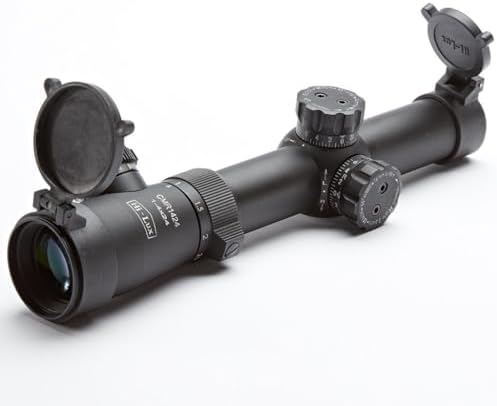


Crimson Trace CTL-3105 3 Series Short-Range Riflescope
$575 price checked August 2026
Read our full CTL-3105 Riflescope review
If you are specifically looking for a sporting application, explore the best tactical riflescope for hunting to see which models lead the pack.
What happens if you go under or over on Objective Lens Diameter?
The risks of under-provisioning objective lens diameter
Under-provisioning occurs when the objective lens diameter is too small for the intended environment, leading to a loss of light transmission. If you choose a 20mm lens for a low-light tactical environment, the image will appear dim, making it harder to distinguish movement or identify targets quickly. This lack of light can lead to “hunting” for the target as the reticle becomes harder to track against a dark background.
Furthermore, very small lenses can sometimes suffer from increased chromatic aberration at the edges of the field of view. While the center of the glass remains clear, the periphery may show color fringing or blurriness. If your tactical use case requires a wide field of view to maintain situational awareness, a small lens diameter can limit the usable area of the optic.
The real cost of over-buying objective lens diameter
Over-buying occurs when you select a large objective lens, such as 50mm or larger, for a role that does not require high light transmission. The primary cost of a larger lens is physical size and weight. A larger objective lens requires a larger housing, which increases the overall length and weight of the tactical scope.
This added bulk can negatively impact the balance of a rifle, making it more cumbersome to maneuver in confined spaces. A heavy, wide-fronted optic can also snag on gear or doorways during movement. Furthermore, larger lenses are more susceptible to “lens shadow” if the eye relief is not perfectly adjusted, as the larger glass surface creates a larger shadow profile. For a budget-first shopper, over-buying also means paying for extra glass and housing material that provides no functional benefit for short-range tactical work.
The mistake most buyers make with Objective Lens Diameter
The most common mistake is assuming that a larger objective lens diameter automatically results in better performance for all distances. Buyers often believe that “bigger is better” regardless of the actual distance they intend to engage.
You should instead optimize for the “light-gathering vs. portability” trade-off. If you are operating in a standard daylight environment at ranges under 300 meters, a 30mm or 32mm objective lens provides more than enough light transmission to produce a clear image. Spending extra money on a 40mm or 45mm lens in this scenario provides no measurable increase in target clarity but adds unnecessary weight and a larger footprint to your setup.
Focus on the range of your mission. If you are a patrol officer or a tactical operator, your priority is a fast-moving, balanced rifle. In these cases, a mid-range diameter like 30mm is the optimal choice because it meets the structural rigidity requirements while keeping the optic’s profile manageable.
How Objective Lens Diameter interacts with other deciding specs
Structural rigidity and the 30mm threshold
The 30mm objective lens diameter is a critical threshold for structural rigidity in tactical scopes. A 30mm tube diameter is the industry standard for ensuring that the internal optics remain stable and aligned during heavy recoil. While the objective lens (the front glass) can be smaller than 30mm, the tube itself should ideally meet this standard to prevent tracking drift.
If you choose a scope with a very large objective lens but a thin, narrow tube, the internal components may lack the necessary support. This can result in a point of impact that shifts during rapid target acquisition. When evaluating options, ensure that the objective lens diameter is supported by a housing that meets the 30mm rigidity standard for your intended use.
The interaction between lens size and magnification
Objective lens diameter is also limited by the magnification power of the optic. As magnification increases, the amount of light reaching the eye decreases significantly. A high-magnification scope requires a larger objective lens to maintain a usable brightness.
If you are using a 4x or 6x tactical optic, a 30mm to 35mm lens is usually sufficient because the magnification is low enough that light loss is minimal. However, if you move toward 10x magnification or higher, you must increase the objective lens diameter to compensate for the magnification’s light-reduction effect. If the objective lens is too small for the magnification level, the image will be too dark to use effectively in anything other than bright, direct sunlight.
Parallax and eye relief constraints
Objective lens diameter interacts with eye relief and parallax. A larger objective lens can sometimes make it more difficult to achieve a clear image if the eye relief is not properly designed for that specific glass size. If the distance from your eye to the lens is incorrect, the larger surface area of a big lens can cause the reticle to appear to float off the target.
For tactical use, where the distance from the eye to the optic can change as the rifle is shouldered, a moderate objective lens diameter (30mm-35mm) is often easier to work with. It provides a more forgiving window for eye relief while still providing enough light for the majority of tactical engagements. Always ensure the lens diameter chosen aligns with your ability to maintain a clear, parallax-free image in your preferred shooting position.